

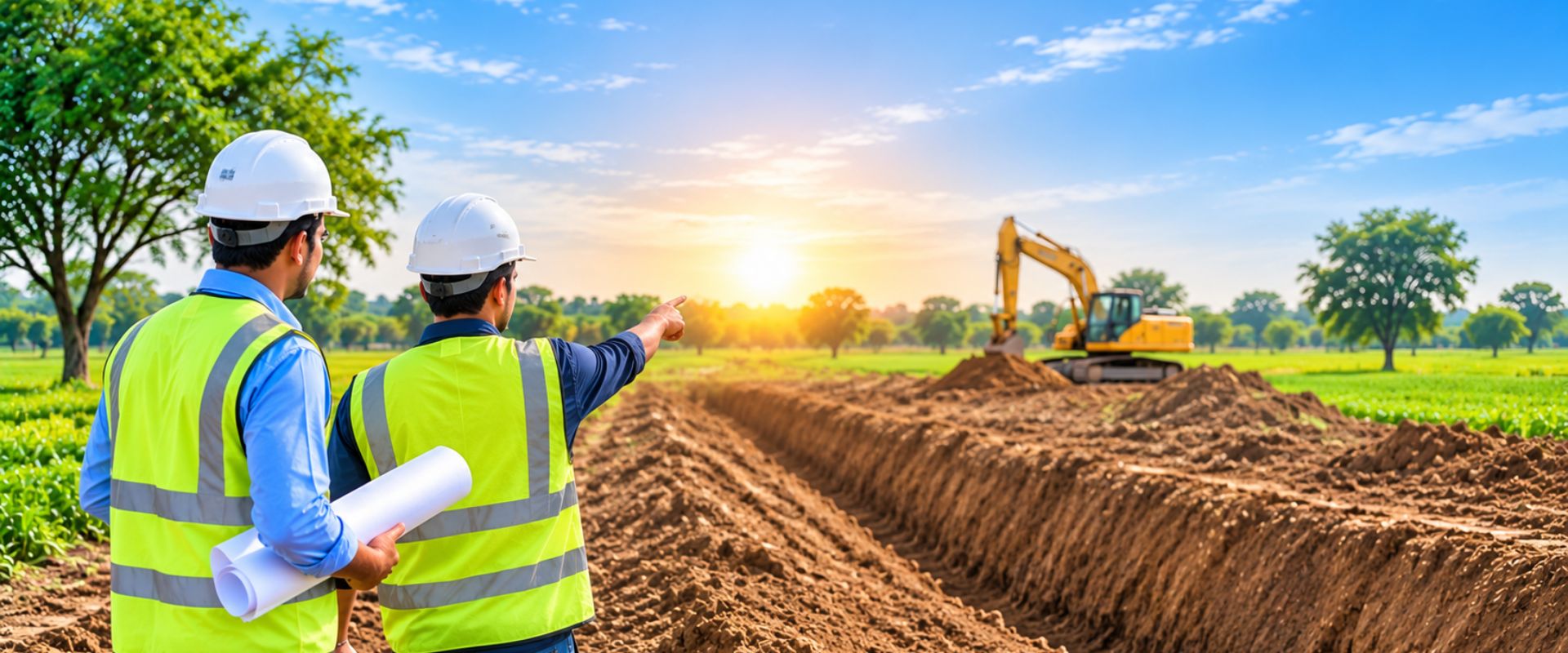

Safe drinking water reaches homes and farms only when the pipeline carrying it is planned, built and maintained well. With a growing population, fast-growing cities and rising water demand, building strong water supply pipeline networks has become a top priority.
A water supply project has many parts: intake structures, water treatment plants, pumping stations, transmission mains (the large pipes that carry water over long distances), distribution networks (the smaller pipes that reach homes), and elevated and ground-level service reservoirs (storage tanks). Each part needs proper planning, design, quality checks, site supervision and regular maintenance.
Even then, many problems can reduce the life and performance of a pipeline. This article explains the common challenges and the practices that help avoid them.
Common Challenges in Water Supply Pipeline Projects
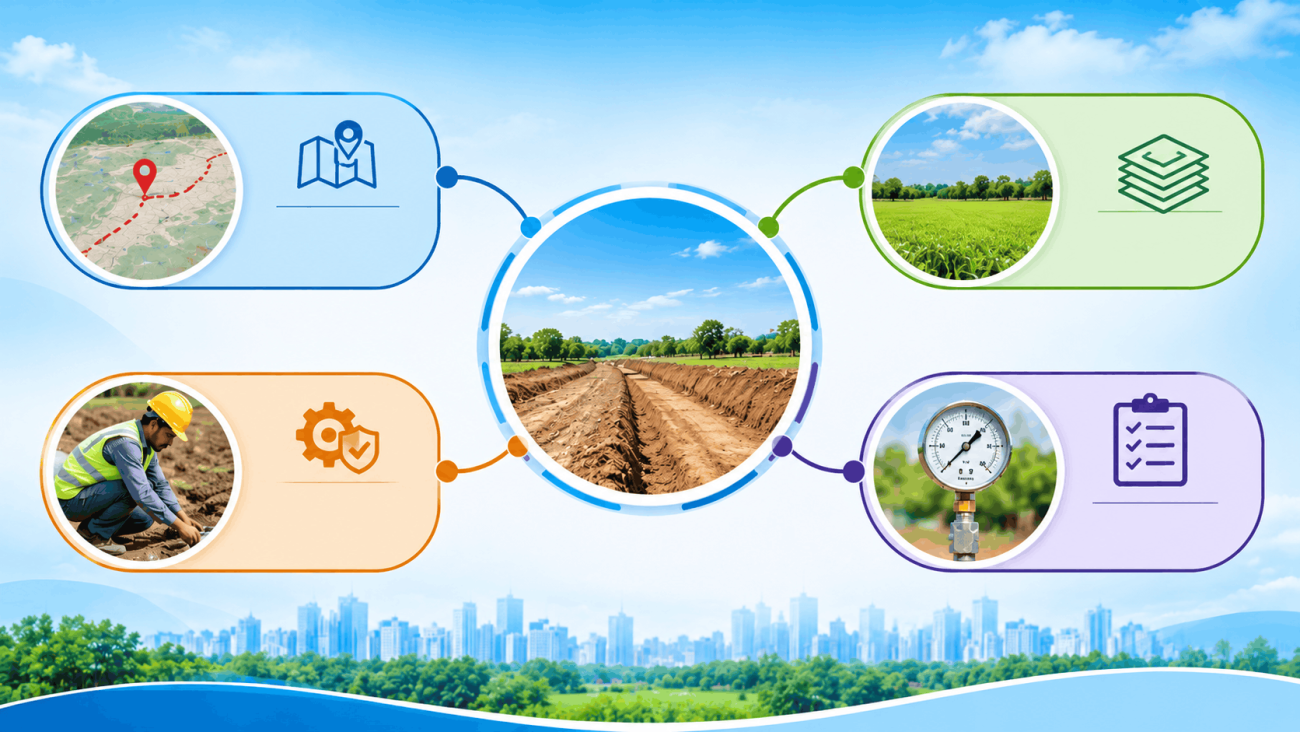
Pipeline route and site conditions
Choosing the route is one of the most important decisions in a project. Underground cables and pipes, road crossings, soil type, groundwater level, nearby buildings and limited land for the pipeline can all cause problems during construction.
Weak site investigation and poor route planning lead to delays, extra cost and maintenance trouble later. Detailed site surveys and mapping of underground utilities, including existing sewer and drainage lines, should be done before work starts.
Choosing the right pipe material
Mild steel (MS), ductile iron (DI), high-density polyethylene (HDPE) and prestressed concrete cylinder pipe (PCCP) are commonly used in water supply projects. The right choice depends on working pressure, soil conditions, water quality, ease of installation, expected life and maintenance needs. A good match improves performance and lowers the chance of early failure.
Quality problems during installation
Many pipeline failures can be traced back to mistakes made during installation. Common ones are poor pipe bedding, wrong jointing, weak welding, thin or damaged protective coating, improper backfilling and poor soil compaction. These lead to leakage, rusting, pipe deformation and early failure. Regular inspection and following the approved construction method prevent most of these problems.
Testing and commissioning
Testing before the pipeline goes into use is a critical step. Pressure testing with water (hydrostatic testing), weld inspection, coating inspection and dimension checks should all be done. If any of these is skipped, hidden defects may go unnoticed and show up later as leaks or bursts when the pipeline is already in service.
Best Practices for a Successful Pipeline
Plan and investigate first
Before construction starts, carry out a topographical survey (land levels and layout), soil investigation, mapping of underground utilities and hydraulic analysis (checking that pipe size and pressure suit the flow needed). This makes sure the route, design and construction method match the actual site conditions and reduces surprises during work.
Check material quality
Every pipe, pipe fitting and valve that reaches the site should be checked against the approved specification, the relevant IS standards and project requirements. Check the pipe surface, diameter, wall thickness, length and straightness, the inside and outside coating, the manufacturer’s test certificates, and the material marking so that it can be traced. Where possible, inspect materials at the factory as well as at the site.
Some commonly used references are IS 4984 for HDPE pipes for drinking water supply, IS 8329 for ductile iron pressure pipes, IS 3589 for steel pipes for water and sewage, and the CPHEEO Manual on Water Supply and Treatment.
Lay and join pipes properly
Good trench preparation and bedding give the pipe even support along its length. Handle pipes carefully during transport, unloading and lowering to avoid damage.
For MS pipelines, welding procedures, welder qualification and weld quality must be monitored. Where required, weld quality should be checked without cutting the pipe, using methods such as radiographic (X-ray) or ultrasonic testing, as set in the approved quality plan. For DI pipelines, follow the approved jointing procedure and the manufacturer’s recommendations.
Laying and joining HDPE pipes
HDPE pipes are light, flexible and do not rust, which is why they are widely used for water supply, rural schemes and farm lines. Their performance depends a lot on how they are joined.
HDPE pipes are usually joined by heat fusion, either butt fusion or electrofusion. The pipe ends must be clean and properly aligned, the heating temperature and time must follow the pipe maker’s guidance, and the joint must be left to cool fully without being moved or loaded. Poor fusion joints are one of the main causes of leakage in HDPE lines.
Place the pipe on a clean bed of sand or fine soil, free of sharp stones. Avoid sharp bends and kinks, and do not drag pipes over rough ground. Store pipes away from long exposure to direct sunlight and from heavy loads that can dent them. HDPE also expands and contracts with temperature, so allow for this during laying and testing.
Inspect and monitor quality
Qualified engineers should inspect the work regularly through all stages: excavation, trench preparation, bedding, laying, jointing, welding, coating, testing, backfilling and surface restoration. Keep proper records of inspection requests, checklists, site observations, test results and corrective actions. If a defect is found, fix it and verify the repair before moving to the next stage.
Pressure testing, flushing and disinfection
Before commissioning, carry out pressure testing as per the approved specification and applicable standards. Testing shows leaks, joint defects and weak spots. HDPE pipes stretch slightly under pressure, so for HDPE lines follow the test method given in the standard or by the pipe manufacturer.
After testing, flush the line, disinfect it and test the water quality before supplying water to the public.
Quality and Safety Go Together
Deep trenches, lifting work, welding and work in confined spaces carry real risk. Sites should have proper shoring (supports that hold the trench walls), barricades, warning signs, approved work permits, protective equipment and regular safety inspections. A strong quality and safety system reduces defects, prevents accidents and cuts rework.
Long-Term Care of the Pipeline
A project is not successful just because construction is complete. Regular inspection, leakage detection, pressure monitoring and preventive maintenance keep the system reliable and extend its life.
Modern tools such as GIS-based pipeline maps, hydraulic modelling, SCADA (remote monitoring and control) and digital project monitoring can reduce water loss and help in better decisions.
Conclusion
Reliable water supply pipelines need sound engineering, the right pipe material, strict quality checks, safe construction and good long-term maintenance. Spotting problems during planning and construction reduces future failures, running cost and repair work.
The goal of every water supply project should be a durable, efficient system that delivers safe water to people for many years.
Frequently Asked Questions
Which pipe material is best for water supply pipelines?
There is no single best material. The choice depends on pressure, soil conditions, water quality, pipe size, installation conditions and budget. MS, DI, HDPE and PCCP are all used. HDPE is popular for rural and medium-size lines because it is light, flexible and does not rust.
Why is hydrostatic testing needed?
In this test, the pipeline is filled with water and brought to the test pressure. It shows leaks, weak joints and other defects before the line is put to use, when they are much easier and cheaper to fix.
What causes leakage in a water supply pipeline?
Common causes are poor jointing, weak bedding, damaged coating, wrong material choice, improper backfilling and poor soil compaction. Most of them come from mistakes during installation.
Why must a new pipeline be flushed and disinfected?
Dirt, soil and germs can enter the pipe during construction. Flushing and disinfection remove them, so the water is safe to drink when supply begins.