

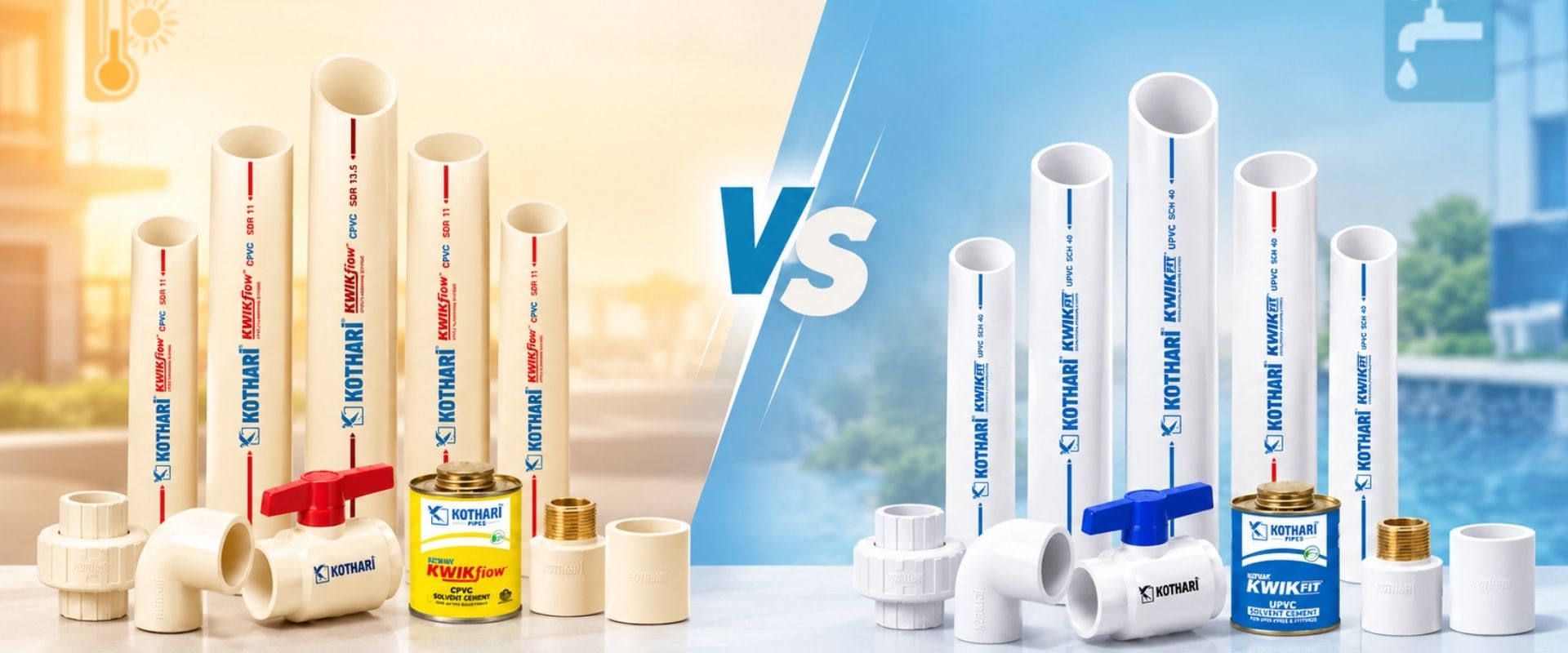
Short answer: use CPVC for hot and cold water lines, and use UPVC for cold water lines. That is the main difference between CPVC vs UPVC pipes, and it should guide most of your choice.
The rest of this guide explains each pipe in plain language, shows where each one fits, and gives you a simple checklist to use before you buy.
What Is CPVC?
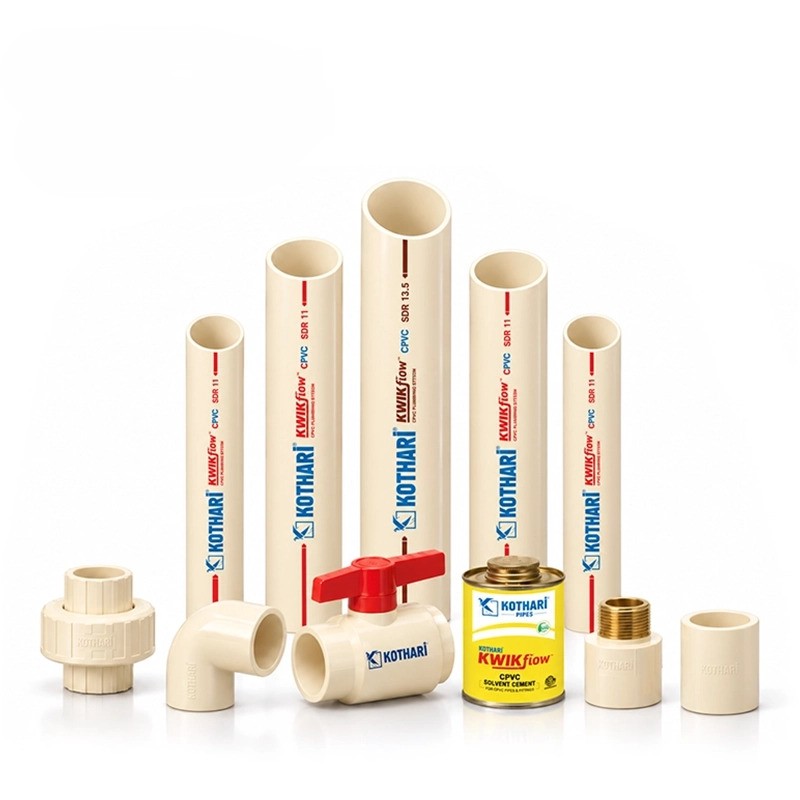
CPVC stands for chlorinated polyvinyl chloride. It is a plastic pipe made for plumbing, and it suits both hot and cold water. That is why plumbers use CPVC pipe for hot water lines, along with the cold lines that run beside them.
In India, CPVC is often chosen as an alternative to GI (galvanised iron) pipes. Kothari’s CPVC pipes and fittings are made for hot and cold water plumbing. They suit all plumbing and potable water applications and are built for Indian homes and tough water conditions.
What Is UPVC?
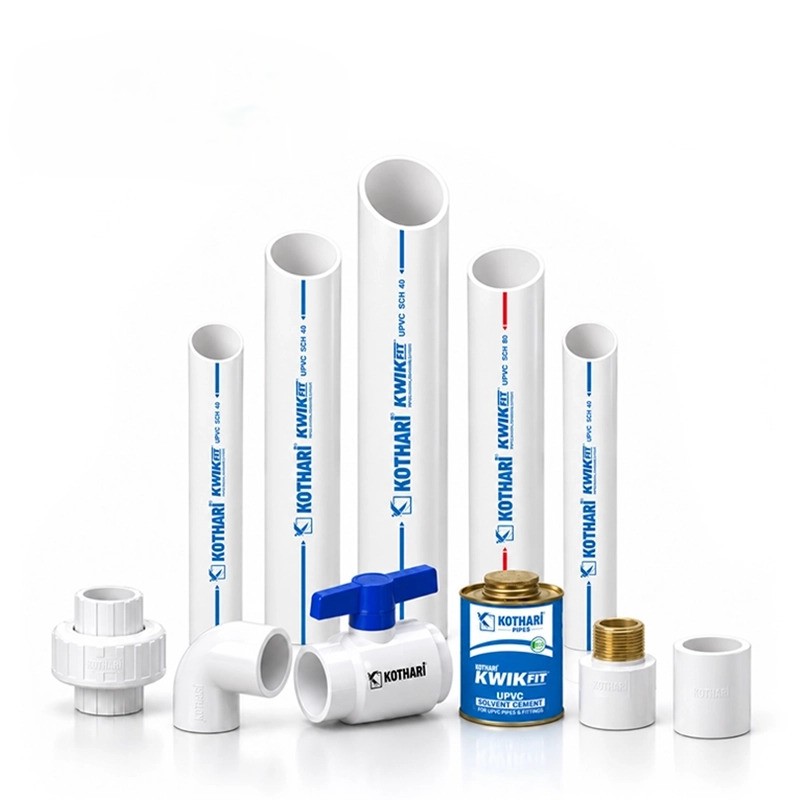
UPVC stands for unplasticised polyvinyl chloride. It is a rigid plastic pipe, and it is a trusted choice for cold water plumbing. If a line carries hot water, UPVC is not the right pipe for it.
UPVC is also made as a pressure pipe. UPVC pressure pipes and fittings carry fluids under pressure and are used for building water supply. They are strong, leak-proof, and easy to install.
CPVC vs UPVC: Side-by-Side Comparison
| CPVC | UPVC | |
| Best for | Hot and cold water | Cold water |
| Typical places used | Regular supply lines, geysers, overhead tanks, bathroom and kitchen lines | Cold water plumbing lines. Pressure pipes for agriculture, industries, and building water supply |
| Joining and fittings | Brass fittings with dual O-rings to lock out leaks. CPVC solvent cement is also available. An arrow printed on the pipe shows flow direction | UPVC pipes and fittings are available. Pressure pipes and fittings are described as leak-proof and easy to install |
| Where Kothari Pipes makes it | Plumbing range: CPVC pipes and fittings | Plumbing range: UPVC pipes and fittings. Also UPVC pressure pipes and fittings |
Where to Use Each Pipe
CPVC pipe for hot water: bathrooms, kitchens and geyser lines
Any line that carries hot water needs a pipe made for it. CPVC is meant for hot and cold water, so it fits the lines that feed geysers, bathrooms, and kitchens. It is also used for regular supply lines.
Overhead tank lines
CPVC is used on overhead tank lines as well. If your plumber is laying one pipe system for both hot and cold supply, CPVC lets you use the same pipe type throughout.
Cold water lines, agriculture and building supply
UPVC is the pipe for cold water plumbing. UPVC pressure pipes go further, into agriculture, industry, and building water supply lines. If the line only carries cold water, UPVC is the natural fit.
How to Choose Between CPVC and UPVC
Work through this checklist before you decide:
- Does this line need hot water? If yes, choose CPVC. If it carries only cold water, UPVC is the pipe for it.
- What kind of building is it? Homes and buildings with geysers need hot and cold lines. Agriculture, industry, and building supply lines often call for UPVC pressure pipes.
- What does your plumber recommend? Your plumber knows the layout of your building and the job in front of them.
- Check the quality marks. Look for clear markings on the pipe and ask your dealer what they mean.
- Think about fittings. Pipe and fittings work as one system, so choose them together.
Still unsure? Talk to our team and describe your project.
Common Misconceptions
“All plastic pipes are the same.” They are not. Different pipes are made for different jobs. CPVC is made for hot and cold water, and UPVC is made for cold water.
“Any pipe is fine for hot water.” Use a pipe made for hot water. CPVC is the one made for it, while UPVC is for cold water.
“Only the pipe matters.” Fittings and joining matter just as much. A good CPVC system uses matching fittings, and Kothari pipe’s range includes brass fittings with dual O-rings and CPVC solvent cement. For more on this, read our guide to common PVC and CPVC pipe installation mistakes.
CPVC and UPVC Pipes
- Kothari CPVC pipes and fittings: for hot and cold water plumbing, with an arrow on the pipe to show flow direction.
- Kothari UPVC pressure pipes and fittings: strong, leak-proof, and easy to install, for agriculture, industries, and building water supply.
Kothari pipe lists ISO, BIS, and RoHS lead-free certifications, and its CPVC pipes and fittings are ISI-marked.
Kothari pipe’s plumbing range also includes SWR and underground drainage pipes. To compare options further, read our post on the benefits of using UPVC and CPVC pipes in construction and our guide on how to select the right pipes for your plumbing needs.
Conclusion: Match the Pipe to the Line
The choice is simpler than it looks. Use CPVC where you need hot and cold water, and use UPVC for cold water lines and pressure pipe jobs. Then pair the pipe with the right fittings and good installation.
If you are choosing pipes for a home, a building, or a farm project, contact the Kothari Group team and we will help you pick the right one.
Frequently Asked Questions
What is the difference between CPVC and UPVC?
CPVC suits hot and cold water plumbing, while UPVC suits cold water plumbing. UPVC is also made as a pressure pipe for agriculture, industries, and building water supply.
Can UPVC be used for hot water?
UPVC is a cold water plumbing pipe, so choose CPVC for hot water lines. If you are unsure which pipe your line needs, ask your plumber or our team.
Which pipe is better for homes?
It depends on the line. CPVC suits hot and cold lines, such as those that feed geysers, bathrooms, and kitchens. UPVC suits cold water lines. Your plumber can help match the pipe to each line in your home.
Are CPVC pipes safe for drinking water?
This is a common question, and we have answered it in detail in our post on whether CPVC pipe is safe for drinking water and what the certification confirms. Read it before you decide. For your project, our team can also guide you.
Can CPVC and UPVC be used together?
Both can serve different lines in the same building, with CPVC where hot water is needed and UPVC for cold water lines.
Which is better for agricultural lines?
UPVC pressure pipes and fittings are made for agriculture, industry, and building water supply, so they are a natural fit for agricultural lines. CPVC is mainly for hot and cold water plumbing in homes and buildings.