
Rainwater Pipes: A Buying Guide for Indian Homes and Buildings
Monsoon season has a way of exposing every weak point in a building’s drainage. It pools where it shouldn’t. Sometimes it finds its way inside through joints and cracks nobody noticed before. This rainwater pipe buying guide covers what actually matters when choosing pipes for your home or building, so you’re not caught off guard when the rain comes down hard.
Whether you’re a homeowner building from scratch, a contractor sourcing for a project, or a dealer advising customers, getting the material, fittings, and installation right makes the difference. A well-chosen system works quietly for decades. A poorly chosen one causes problems every monsoon.
Why Rainwater Pipe Choice Matters
A poorly chosen rainwater pipe shows its weaknesses fast. Water overflows at the gutter, streaking down external walls, and in the worst cases, water working its way into the building through cracks or poorly sealed joints, these are all signs of a system that wasn’t set up right from the start.
Getting this right isn’t just about picking any pipe off the shelf. It comes down to a few things: choosing the right material for your climate and building type, using fittings that actually match your pipe, and working with a manufacturer whose products last through repeated monsoons, not just one season.
For the exact pipe size your roof needs, check with a qualified plumber or your pipe dealer. This depends on your roof area, local rainfall patterns, and building layout. This guide focuses on what you can evaluate yourself: material, fittings, and buying decisions.
PVC vs Other Materials for Rainwater Pipes
A rainwater pipe material comparison usually comes down to PVC, cast iron, or galvanized iron (GI). PVC has become the dominant choice for most residential and commercial projects across India.
| Material | Durability | Cost | Maintenance |
| PVC | Corrosion-resistant, doesn’t rust | Lower upfront cost | Low, minimal upkeep needed |
| Cast Iron | Very durable, but heavy | Higher cost | Prone to rust over time |
| Galvanized Iron (GI) | Durable initially | Moderate cost | Corrodes faster in wet conditions |
PVC rainwater pipes in India have become the standard choice for a few clear reasons. They don’t corrode from constant water exposure. They’re lighter and easier to install. And they cost less over the life of the system since there’s no rust to manage. For most homes and mid-rise buildings, PVC is the practical default unless a specific structural or aesthetic requirement calls for something else.
Rainwater Pipe Fittings and Joints: What to Know
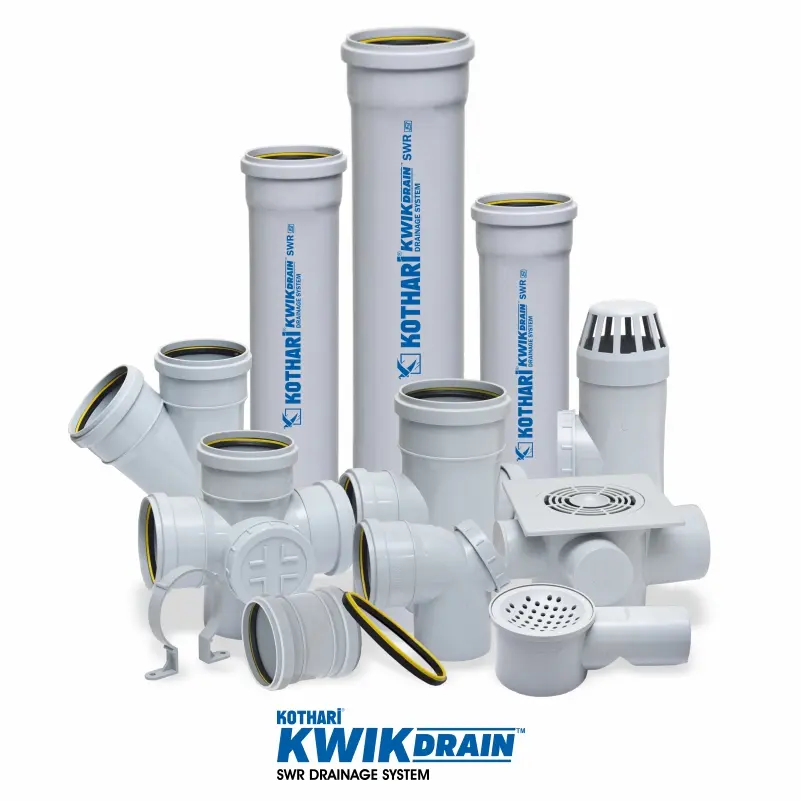
The pipe itself is only half the system. Rainwater pipe fittings, elbows, offsets, shoes, and connectors at the base, all need to match the pipe size. They also need to handle the same flow without creating bottlenecks.
A few things worth checking:
- Joint type: solvent-cement (glued) joints are common for PVC rainwater pipes. Done correctly, they create a strong, leak-resistant connection
- Offset bends: needed wherever the pipe has to route around a structural obstacle. Each bend slightly reduces flow efficiency, so minimize them where possible
- Pipe clips and brackets: these secure the pipe to the wall at regular intervals. They prevent sagging or movement over time, especially important on taller buildings
Common Mistakes When Choosing Rainwater Pipes
A few recurring errors show up again and again when people select rainwater drainage pipes:
- Choosing the cheapest option available: a lower price often means thinner walls or lower-grade material. Both shorten the pipe’s working life
- Mismatching fittings to pipes: fittings from a different product line or brand can create weak joints. These joints leak or fail early
- Ignoring roof overhangs and projections: these add to the effective area draining into the pipe. People often overlook them when planning the system
- Skipping the slope check on horizontal runs: even a good-quality pipe won’t drain properly if it’s laid flat or against the fall
What to Check Before Buying
Before you finalize your rainwater pipe order, run through this checklist:
- Choose PVC for most residential and commercial applications, unless a specific project requirement says otherwise
- Match fittings to pipe diameter and brand so there’s no bottleneck at joints or bends
- Check for consistent wall thickness and build quality, not just the lowest price
- Ask your dealer about the right pipe size for your roof, since this varies by area and local rainfall
- Buy from a manufacturer with a consistent product range, so replacement pipes and fittings still match years later if repairs are needed
Kothari Group manufactures rainwater pipes as part of its Soil, Waste & Rainwater Pipes and Fittings range, built for the durability needs of Indian homes and buildings through repeated monsoon seasons. You can explore the SWR pipes and fittings range directly. And if you’re also planning underground drainage alongside your rainwater system, our guide on underground drainage systems covers what typically comes next.
Conclusion
Choosing the right rainwater pipes doesn’t need to be complicated, but it does mean looking past just the price tag. Go with PVC for most projects. Make sure your fittings actually match your pipes. Buy from a manufacturer whose products are consistent enough that repairs and replacements stay simple years down the line. Get those basics right, and your drainage system will hold up through whatever the monsoon brings.
Need help choosing the right rainwater pipes for your project? Get in touch with Kothari Group to request a quotation or speak with our team about the right pipes for your building.
Frequently Asked Questions
Which is better for rainwater pipes: PVC or cast iron?
PVC is generally the better choice for most homes and buildings. It resists corrosion, costs less, and needs minimal maintenance compared to cast iron or galvanized iron, both of which are prone to rust over time.
How do I know what size rainwater pipe I need?
Pipe size depends on your roof area and local rainfall intensity. It’s best to check with a qualified plumber or your pipe dealer, who can recommend the right size for your specific building.
Do rainwater pipe fittings need to match the pipe brand exactly?
It’s best practice. Fittings from a different product line or brand can create weak joints. These are more prone to leaks or early failure, even if the pipe itself is good quality.
What’s the most common mistake people make when buying rainwater pipes?
Choosing the cheapest option available is one of the most common mistakes. Lower-cost pipes often have thinner walls or lower-grade material, which shortens their working life.
Can I use the same rainwater pipes for a large or unusually shaped roof?
Not always. Larger or irregularly shaped roofs sometimes need drainage split across two or more downpipes rather than relying on a single pipe. Your dealer or plumber can help assess this.
Why does joint quality matter for rainwater pipes?
A poorly made joint, whether from mismatched fittings or incorrect installation, is one of the most common points of failure in a rainwater drainage system. This leads to leaks even when the pipe itself is fine.
