

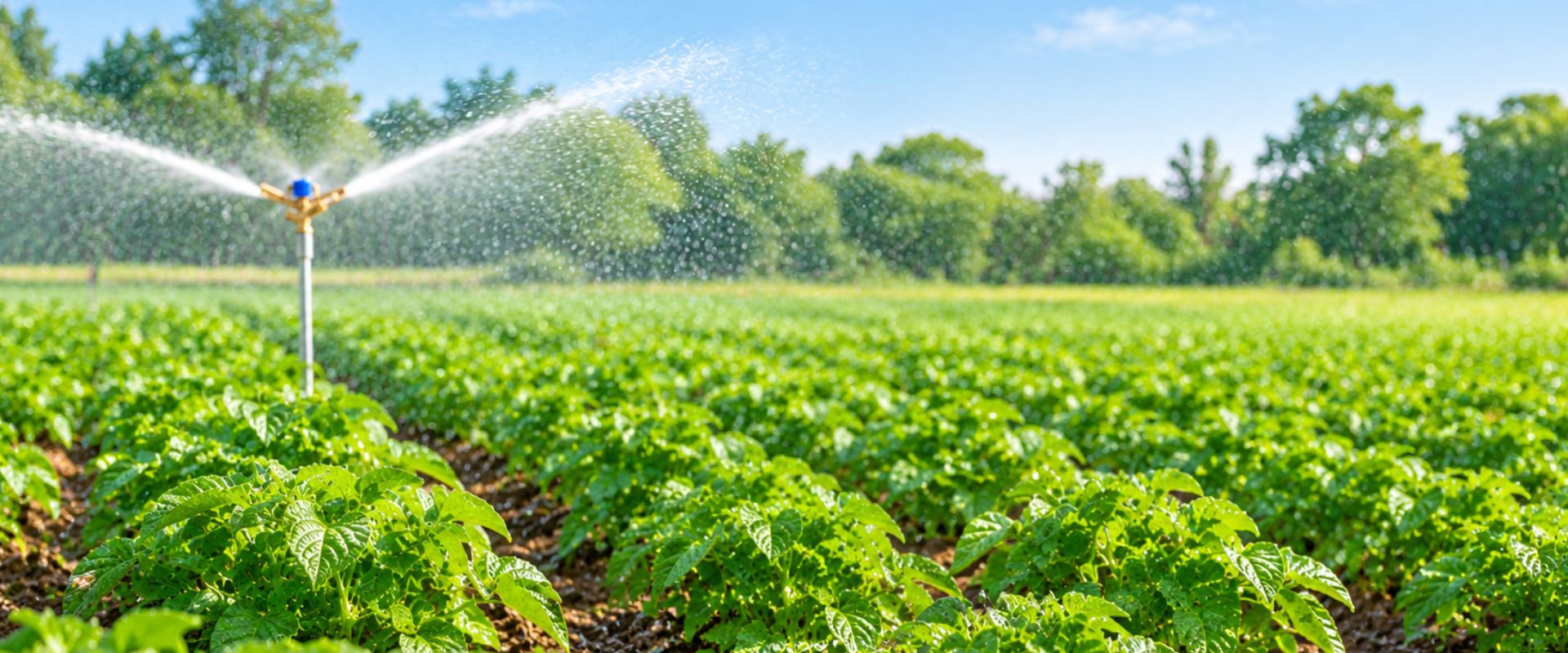
Potatoes are a big deal in India. They’re a staple crop, especially in Uttar Pradesh, which churned out about 20.4 million tonnes in 2024–25 that’s around 35% of the country’s total crop. Yields change across regions, but smart irrigation can help level things out.
But let’s be clear: sprinkler irrigation for potato isn’t just about dumping water on the field. You need to give just the right amount, at the right time, and it needs to reach every plant evenly. This guide takes you through how sprinkler systems actually work for potatoes, which stages deserve the most attention, how they stack up against furrow and drip setups, and how to handle disease risks. If you’ve seen our wheat sprinkler guide, this is the next in that crop series.
Why Irrigation Timing and Uniformity Matter for Potato
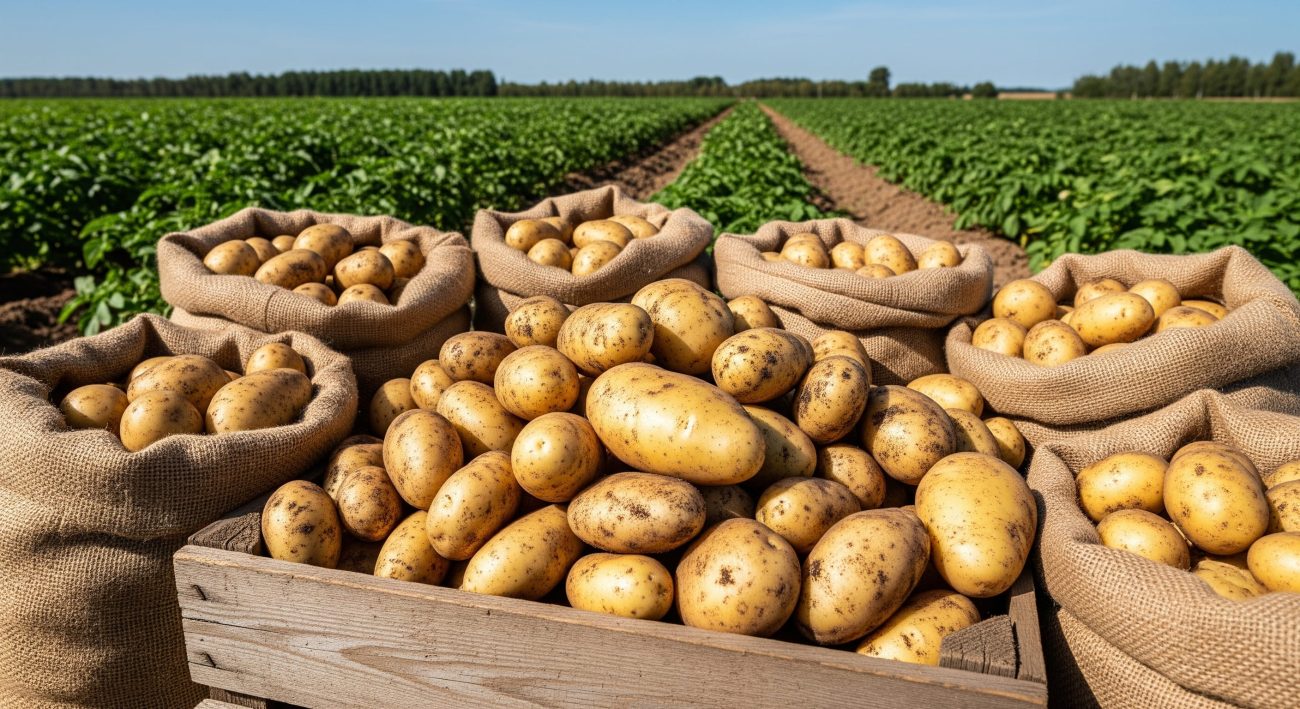
Potatoes don’t have deep roots. Most of the tubers you eat develop in the top layer of soil. When moisture keeps swinging between dry and soaked in that layer, the crop reacts.
That’s when you start seeing problems:
- Growth cracks happen when a dry spell is suddenly followed by a lot of water.
- Knobby, misshapen tubers crop up when the plant gets stressed, slows down, and then tries to grow unevenly.
- Hollow heart shows up as an inner cavity, usually after the plant stops growing from stress and then races back with fast growth.
Poor water management doesn’t just mess with appearance, it hits quality, too. If plants get stressed during tuber bulking, dry matter drops, sugars go up, and you end up with bad fry color (really important for chip varieties).
So, it’s not just how much water you give, but how evenly you spread it.
Potato Irrigation by Growth Stage
Potatoes need different amounts of water at different points. Here are the key stages:
- Planting and emergence: Start with moist soil. Hold off heavy watering until you see shoots so the seed tubers don’t rot sitting in wet dirt.
- Stolon and tuber initiation: These are the most sensitive phases. If you mess up here, you’ll lose tubers.
- Tuber bulking: This is when the tubers fill out. Even moisture means bigger, better tubers with fewer cracks and hollow hearts.
- Maturity and vine cut-off: Ease up on irrigation. You want the tuber skin to toughen up before harvest. The International Potato Center says to stop watering about two weeks before vine cutting, but local advice can vary (check with ICAR-CPRI or your state ag office).
The timeline shifts depending on variety, climate, and planting date. Focus most on tuber initiation and bulking stages.
Why Sprinkler Irrigation Works Well for Potato
Sprinklers simulate rainfall, spraying water over the crop. They’re a good fit for potatoes mostly because:
- Shallow roots: Potatoes benefit from light, well-timed watering that keeps upper soil moist.
- Sandy or light soils: Flooding often sends water right past the roots, but sprinklers let you fine-tune the amount.
- Uneven land: Sprinklers don’t need perfectly leveled fields like flood or furrow systems do.
- Frost protection: Sprinklers can be used to help fend off frost, provided coverage and timing are right.
But for sprinklers to actually work, you need a good system. If the pressure is uneven, spacing is wrong, or nozzles get worn out, you’ll see dry and wet patches, basically what you’re trying to avoid.
Sprinkler vs Furrow Irrigation for Potato
There’s no one-size-fits-all solution. Here’s a quick rundown on how these methods stack up:
| Parameter | Sprinkler | Furrow |
| Water use | Applied in measured amounts. Some loss to wind and evaporation | Higher losses on uneven or light soils |
| Uniformity | Depends on design, pressure, spacing, and wind | Depends on field levelling and furrow length |
| Labour | Lower than flooding. Portable laterals need moving | Needs regular channel management |
| Disease pressure | Wets foliage, so timing matters | The foliage is mostly dry. Standing water can raise rot risk |
| Soil and farm size | Light to medium soils, uneven land, small to large fields | Levelled fields with a good water supply |
Drip systems are popular for keeping leaves dry and applying fertilizer with irrigation. Sprinklers shine on uneven land and sandy soils, plus they double for frost protection. If you want to dig deeper, check out our guides on irrigation methods or compare drip and sprinkler systems.
Managing Late Blight Risk with Sprinkler Irrigation
Late blight is a nasty potato disease that spreads fast in cool, damp weather. Sprinkler systems wet leaves, so timing becomes really important.
University extension advice is pretty simple:
- Water early in the morning so leaves dry by nightfall.
- Skip late afternoon and evening watering. Wet leaves after dark might stay soggy all night.
- If it’s humid or cloudy and leaves are drying slowly, wait a bit or cut irrigation short (if soil moisture allows).
- Ease up on irrigation late in the season, since extra water can wash disease spores down to the tubers.
Scout your fields regularly and follow local expert advice and fungicide decisions depending on what’s happening on your farm.
Three Questions for Better Potato Irrigation
No matter your method, a good irrigation plan answers these:
- When do I water? Use the growth stage, soil moisture, and weather to decide.
- How much water? Factor in soil type, root zone, crop stage, and how your irrigation system works.
- Is water reaching the whole field evenly? Check system design, pressure, spacing, wind, and nozzle condition.
A top-notch sprinkler system helps you answer all three. It turns irrigation into a management tool, not just a water delivery thing.
Kothari Sprinkler Irrigation System for Potato
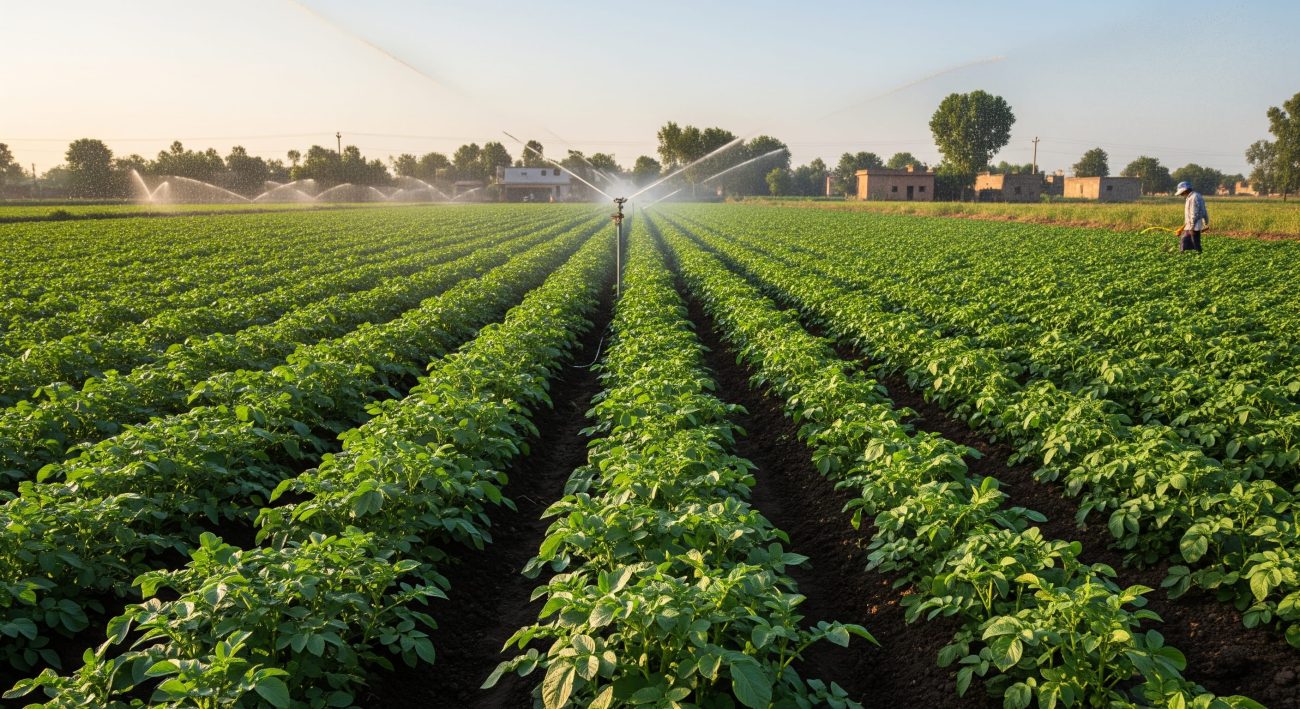
For open fields with ridges, the Kothari Sprinkler System gives you rainfall-like coverage that’s easy to adjust by crop stage. But the sprinkler is just one piece of the setup. You’ll need to plan the whole system:
- Water source and pump
- Filtration
- Mainline and submain pipes
- Laterals
- Operating pressure
- Sprinkler spacing
- Scheduling
Kothari makes micro and mini sprinklers too. The right one depends on your field size, water source, and layout. Talk to their team for advice.
Best Practices for Potato Irrigation
Just installing sprinklers doesn’t guarantee better yields. Combine them with good crop management:
- Use certified seed tubers. Healthy seeds mean stronger, more uniform crops.
- Prep the soil the right way. Loose, well-drained ridges help tubers grow and avoid waterlogging.
- Feed based on soil tests, not guessing.
- Schedule irrigation by growth stage focus on tuber initiation and bulking.
- Check pressure and nozzles often; worn or blocked nozzles lead to dry spots.
- Plan when to stop watering so tuber skins are set before harvest.
- Monitor for disease, especially in humid, cloudy weather.
Conclusion: Even Moisture Is Everything
Potatoes thrive with steady, well-timed irrigation. Sprinklers really work when the system is properly designed, scheduled around growth, and run so leaves dry out quickly. Pair that with strong seeds, good soil prep, and balanced nutrition, and you’re on your way.
If you’re thinking about potato irrigation, get in touch with the Kothari Group to figure out the setup that fits your field.
Frequently Asked Questions
Which irrigation method is best for potatoes?
There isn’t a single best method; it depends on your soil, water source, land slope, farm size, and disease risks. Sprinkler and drip systems give you more control than flooding, so the choice depends on what your field needs.
What’s the most critical stage for irrigation in potatoes?
Tuber initiation and bulking are the most sensitive stages. Protecting the stolon stage before them also helps. Even watering during these periods keeps tuber numbers, size, and quality up.
How often should potatoes be irrigated?
It varies by soil, weather, and crop stage. Sandy soils need lighter, more frequent watering; heavier soils can go longer. Keep an eye on soil moisture and follow local ag advice.
Does sprinkler irrigation increase late blight in potatoes?
It can, since sprinklers wet the leaves and late blight likes extended leaf wetness. Manage it by watering so leaves dry fast, avoiding late-day irrigation, and scouting fields. Always follow local plant-protection guidance.
Is sprinkler or drip irrigation better for potatoes?
Both have their strengths. Drip keeps leaves dry and is great for fertigation. Sprinklers suit uneven land and light soils, plus they can protect against frost. Pick the one that fits your field and farm size.
When should you stop irrigating before harvest?
The International Potato Center recommends stopping about two weeks before vine cutting so the tuber skin can set. Double-check timing with your local ag department or ICAR-CPRI.
Can sprinklers protect potatoes from frost?
Yes, they can. Just make sure you’ve got uniform coverage, the right timing, and a system built for it. Always follow local agronomy advice before depending on them for frost protection.