

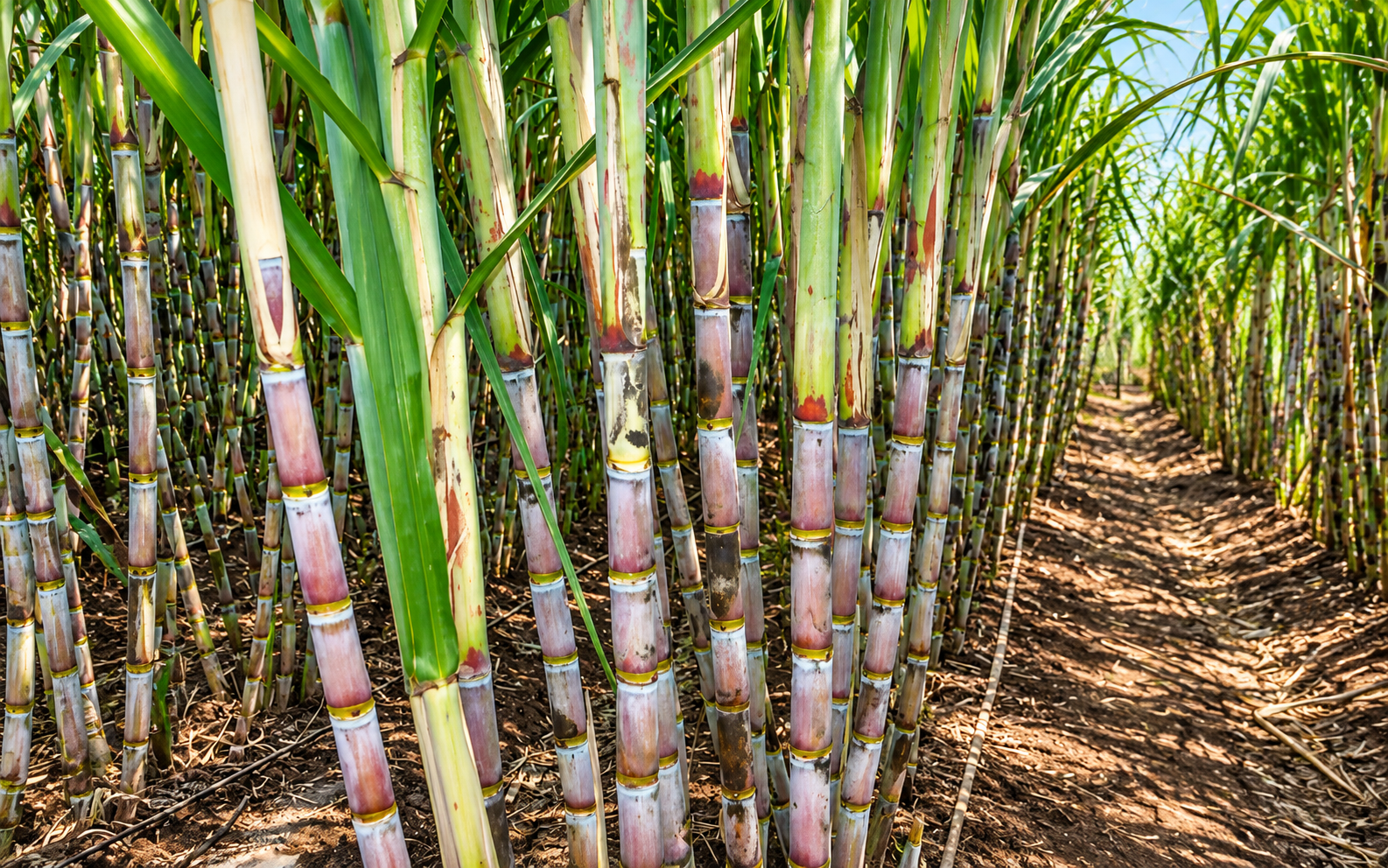
Drip Irrigation for Sugarcane
A planned drip irrigation system helps distribute water along sugarcane rows while keeping field layout, water supply and irrigation control in view.
Understanding Drip Irrigation for Sugarcane
Sugarcane has a relatively long crop cycle, and irrigation needs to be managed across the crop area throughout its growth stages. In larger fields, the challenge is not only bringing water to the farm but distributing it through the rows in an organised manner.
Drip irrigation for sugarcane uses a network of mainlines, submain or distribution lines and driplines placed along the crop rows. Water moves from the source through the pipeline network and reaches the crop through the dripline. This makes the design of the distribution network an important part of the overall irrigation system.
Field size, row arrangement, water availability, operating pressure, filtration and the number of irrigation sections all influence how the system should be planned. The dripline also needs to suit the field conditions and remain practical to operate and maintain during the crop cycle.
For farmers and agricultural professionals, the objective is to create a water-distribution arrangement that matches the sugarcane field layout rather than treating the dripline as an isolated component.
Where Drip Irrigation for Sugarcane Is Used
Drip irrigation can be planned for sugarcane fields where water needs to be distributed along defined crop rows through a pipeline-based irrigation network. The system can be adapted to the field layout, water source and method of irrigation management
Common applications include:
Commercial Sugarcane Farms
Larger sugarcane farms can use row-based drip distribution with the field divided into manageable irrigation sections.
Open-Field Sugarcane Cultivation
In open fields, the dripline is positioned along the crop rows and connected to the wider irrigation network.
New Sugarcane Plantations
For newly established fields, the irrigation layout can be planned along with the crop-row arrangement so that distribution lines and dripline locations are considered from the beginning.
Established Sugarcane Fields
Existing farms can assess their water source, current pipeline arrangement and crop layout before developing or modifying the drip irrigation network.
Multi-Section Irrigation
Where a field is divided into multiple sections, the pipeline arrangement can be planned to supply different areas according to the irrigation schedule and available water.
Key Requirements for Sugarcane Drip Irrigation
A sugarcane drip irrigation system should be planned around the field rather than selecting the dripline first. The crop-row arrangement, available water and irrigation network need to work togethe.
Recommended Kothari Products
Kothari's Dripline K-Lin PCAS and Dripline K-Lin NPC can be used as part of a sugarcane drip irrigation arrangement. Their role is at the field-distribution stage, where water from the irrigation pipeline network is delivered along the crop rows.

Dripline K-Lin PCAS
Dripline K-Lin PCAS is relevant where the irrigation layout requires dripline-based water distribution along sugarcane rows. It forms part of the field-level network between the distribution pipeline and the crop area.

Dripline K-Lin NPC
Dripline K-Lin NPC can be used for row-based drip irrigation where water needs to be distributed through a planned field network. It is positioned at the crop-distribution stage, after water has travelled through the main and distribution pipelines.
| Application Requirement | Recommended Kothari Product | Role in the System |
|---|---|---|
| Row-based drip distribution | Dripline K-Lin PCAS | Field-level water distribution |
| Sugarcane row irrigation | Dripline K-Lin NPC | Crop-row water distribution |
| Field irrigation network | K-Lin PCAS / K-Lin NPC | Final distribution stage |
Planning Drip Irrigation for Sugarcane?
Share your field layout, water source and irrigation requirements with the Kothari team to discuss the appropriate dripline arrangement.
Discuss Your Requirement