


Rainwater Drainage Systems
Plan rainwater drainage around roof areas, rainfall intensity, drainage routes and safe discharge points to manage water across the building site.
Rainwater Drainage System Overview
When it rains hard, water pools up on rooftops, terraces, and anywhere else that's out in the open. That water has to go somewhere if it just sits there or isn't directed away properly, it ends up gathering around the building. You might find walkways flooded, or the drainage system just gets overwhelmed with all that extra water.
A good rainwater drainage system steps in here. It grabs the runoff from the roof and other surfaces and channels it away, using a mix of vertical and horizontal pipes to steer it toward a safe spot, whether that's a drain, a collection tank, or a recharge pit. The piping network therefore needs to be planned around the building layout, catchment area, rainfall conditions and available discharge route.
For building owners, contractors and plumbing teams, pipe selection is only one part of the system. The routing, connection points, pipe capacity, vertical drops and discharge arrangement all need to work together. Exposed sections may also need to account for the building's appearance and operating environment.
Kothari's PP Low Noise Drainage System and SWR (Soil, Waste & Rainwater) Piping System can be considered for rainwater drainage requirements based on the project design and application conditions.
Where Rainwater Drainage Systems Are Used
Rainwater drainage systems are used wherever rainfall needs to be collected from roofs, terraces or other building surfaces and directed away from the structure.
Residential buildings
A sloped roof or an open terrace sheds water fast once the rain picks up the job here is simple but has to be exact: catch it at the right points and get it down and away before it pools or finds its way where it shouldn't.
Apartment projects
Multiple blocks means multiple roofs draining at the same time, often at different heights the vertical drops have to tie into a horizontal layout that can actually carry that combined volume without backing up at the lowest point.
Commercial buildings
Flat roofs are common on offices and retail spaces, and flat roofs don't shed water on their own the way a sloped residential roof does; outlets and gradients have to be planned in, not assumed.
Industrial buildings
A factory shed roof can be enormous compared to a house roof, and when the monsoon hits hard, that whole surface is draining at once undersized piping here shows up fast as pooling or backflow.
Institutional buildings
Hospitals and schools are usually spread across several connected structures rather than one block, so rainwater routing has to follow whatever irregular footprint the campus actually has, not a textbook layout.
Warehouses and large roof structures
These roofs are built for span, not drainage, which means outlets and piping runs are often the one part of the structure that has to be deliberately engineered rather than left to the roof's natural fall.
The final system layout depends on the building design, roof area, rainfall conditions, drainage route and designated discharge or reuse arrangement.
Key Requirements for Rainwater Drainage
Rainwater drainage should be planned from the point where water is collected through to its final discharge or collection point. The system needs to handle the expected runoff while fitting within the building and site layout.
Recommended Kothari Products
Kothari offers drainage systems that can be considered for rainwater applications depending on the building design, drainage arrangement and project requirements.
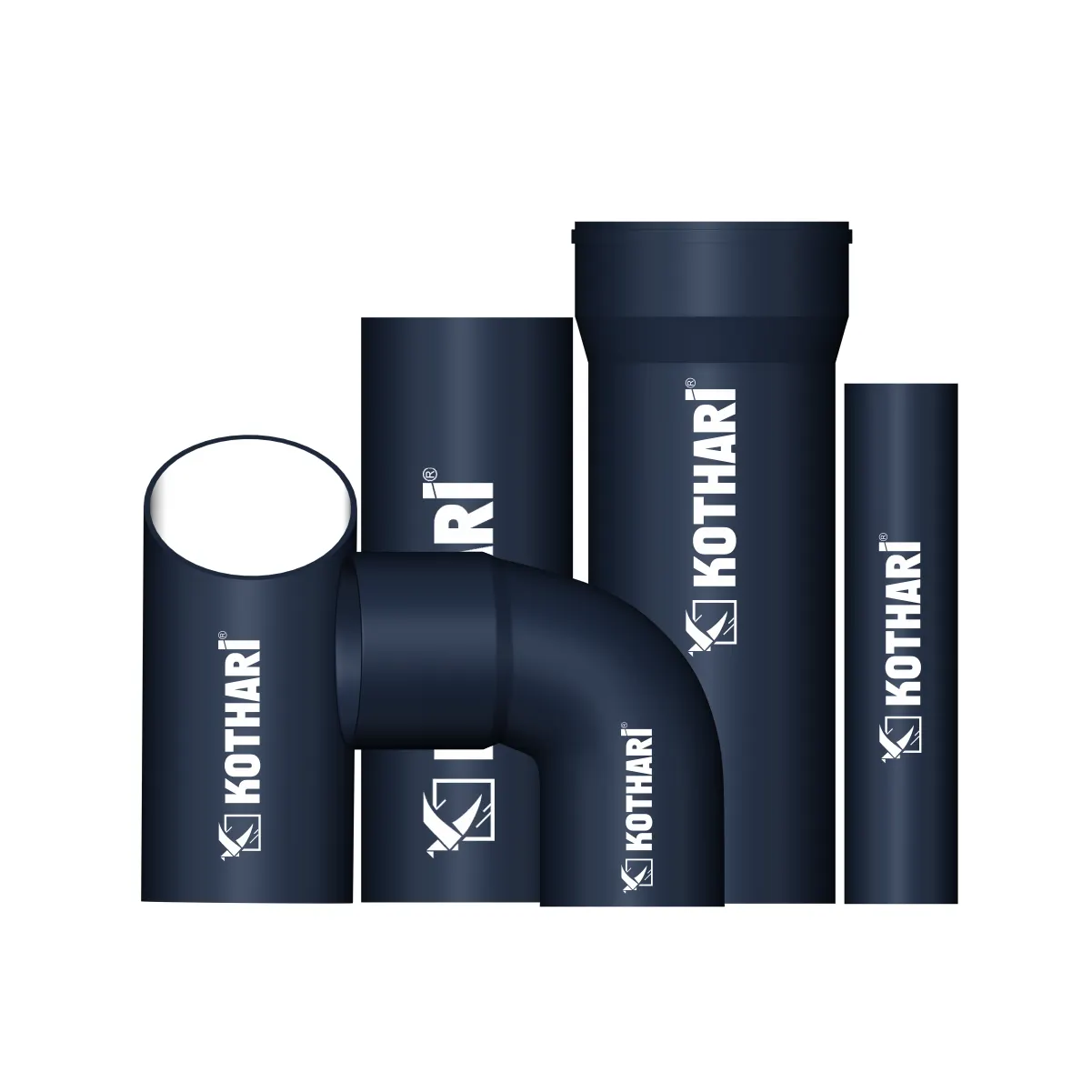
PP Low Noise Drainage System
The PP Low Noise Drainage System is a three-layer mineral-filled polypropylene drainage system that can be considered where reduced drainage noise is an important consideration in building design.
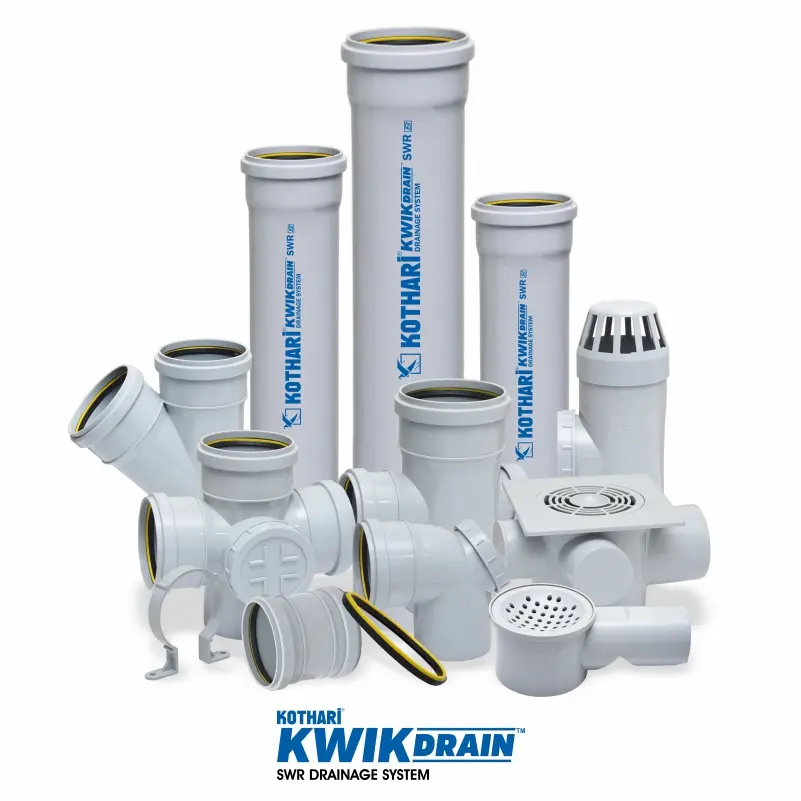
SWR (Soil, Waste & Rainwater) Piping System
The SWR Piping System is designed for soil, waste and rainwater drainage applications. This makes it directly relevant to building drainage networks where rainwater needs to be collected and conveyed through planned piping routes.
Application-to-Product Mapping
| Application Requirement | Recommended Kothari Product | Role in the System |
|---|---|---|
| Building rainwater drainage | SWR Piping System | Collection and conveyance of rainwater |
| Drainage where reduced noise is a consideration | PP Low Noise Drainage System | Drainage piping within the building system |
Planning a Rainwater Drainage System?
Share your building layout, roof area and drainage requirements with the Kothari team to discuss suitable piping options for your project.
Discuss Your Requirement