
Drip Irrigation for Cotton Farming in India: A Complete Guide
Cotton is known for loving water. Traditionally, most Indian farmers have managed this with flood irrigation basically, soaking fields over and over as the crop grows. But now, drip irrigation for cotton farming is starting to shift the story. With drip, water goes straight to the roots, there’s way less waste, and farmers get much tighter control over how much and how often they irrigate.
If you’re growing cotton in states like Gujarat, Maharashtra, Punjab, or Telangana and wondering if it’s worth switching, let’s dig into what actually happens when you do, how much water you can really save, and what setting up a drip system actually looks like.
Why More Cotton Farmers Are Turning to Drip Irrigation
India grows cotton on over 13 million hectares, and still, nearly two-thirds of that depends entirely on rainfall. In the northwest, think Punjab, Haryana, Rajasthan farmers typically use flood irrigation. While flood irrigation keeps fields green, a lot of that water just runs off or soaks way below the roots before the plants get a chance to use it. It’s not efficient.
Drip irrigation for cotton in India changes this. It sends water right to the roots, slowly and steadily. For numbers, ICAR’s Central Institute for Cotton Research (CICR) in Nagpur tracked this: using conventional irrigation, cotton needed 78.3 hectare-centimetres of water. With standard, careful drip irrigation, that dropped to 51. Sensor-based drip systems reduced it even more, down to 45.3.
That’s not just a minor tweak. It means real, water saving irrigation for cotton, lower electricity bills because pumps run less, and often healthier, more productive plants that aren’t swinging between drought and flood every week. These numbers also point to one of the clearest drip irrigation benefits for cotton: consistent, predictable water use instead of guesswork.
Understanding Cotton Crop Water Requirement
Cotton’s thirst isn’t constant; it changes as the crop grows. This is actually one place where drip irrigation shines, letting you match the water to the plant’s stage, instead of dumping on a fixed amount no matter what. Getting the cotton crop water requirement right at each stage is at the heart of good cotton farming water management.
During germination, cotton needs light, frequent watering to keep the topsoil moist. When the plant hits its vegetative growth stage, moderate, steady watering helps develop good roots and a healthy canopy. The real peak comes during flowering and boll formation; this is when the crop wants the most water. If it’s stressed now, it produces fewer bolls. Later, during boll maturation, you cut back on water to help the fibre develop and mature well. Too much water here can actually hurt quality.
Flood irrigation can’t really follow this curve; it tends to hit the field with big, uneven doses. Drip lets you adjust as you go, and that’s exactly why CICR’s studies show water use drops so sharply with no hit to yield.
Setting Up a Drip System for Cotton Fields
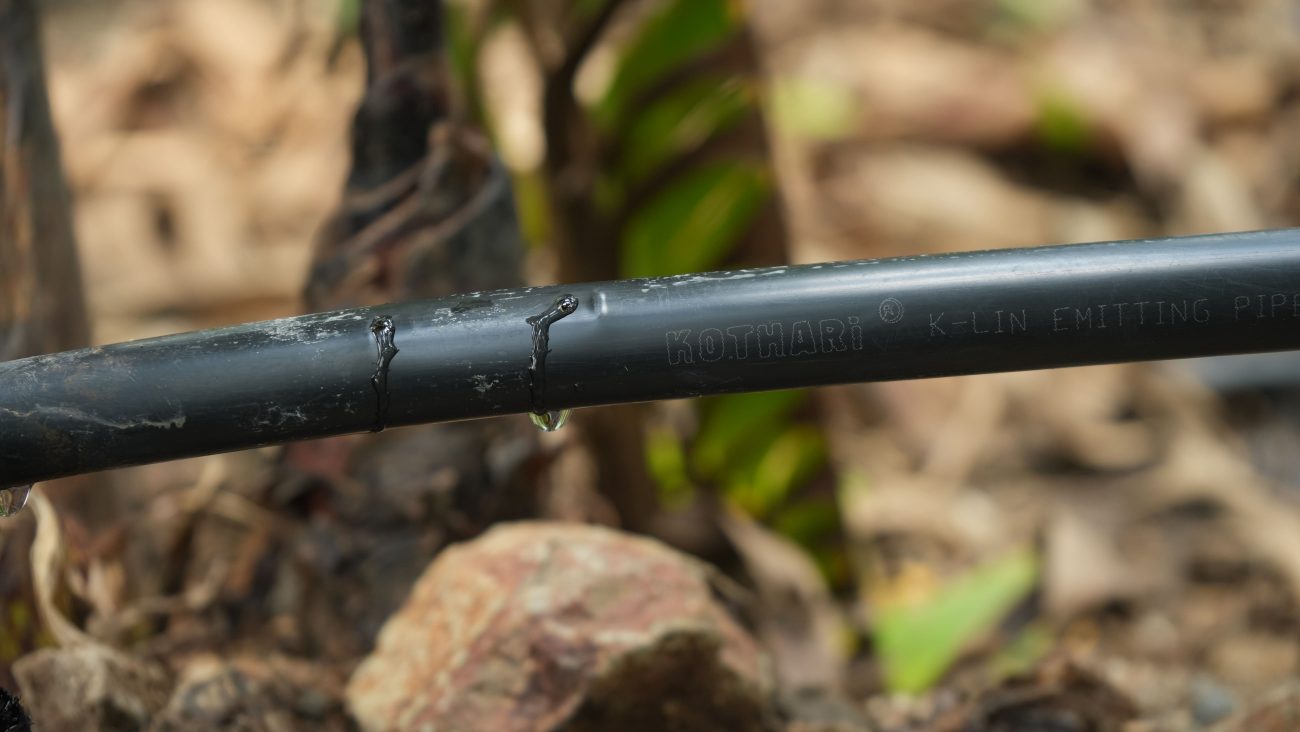
The basics of a drip system for cotton fields look like any drip system for row crops but because cotton is usually spaced wider than most vegetables, you need to pay closer attention to emitter spacing and layout.
Here’s what you’ll need:
- A water source and pump
- A filtration system is crucial in cotton areas, since canal and borewell water often bring in a lot of sand and silt
- A fertigation unit, if you want to mix plant food with your irrigation
- Main and submain pipes
- Lateral lines with inline drippers spaced to match your rows
Inline drippers that match plant spacing let you deliver water right along the whole row, not just in a single spot. Choose your emitter flow rate based on the soil. Sandier soils dry out faster and need shorter, more frequent cycles, while heavier soils hold onto water longer.
Fertigation for Cotton: Feeding Cotton While You Water
One of the best features of drip is fertigation for cotton feeding your plants as you irrigate. Cotton especially benefits from splitting up its nitrogen feed, giving small, steady doses throughout the season instead of one big hit that washes away. This really matters during flowering and boll formation, when the plants want both water and nutrients the most. Well-timed fertigation at this point helps keep more bolls on the plant and improves fibre quality too.
A Practical Cotton Irrigation Schedule
Every field is different, but here’s a simple cotton irrigation schedule to start with:
- Germination (first 3 weeks): Light, frequent watering just enough to keep the surface moist
- Vegetative stage (weeks 3–8): Moderate, regular irrigation as the plants grow bigger
- Flowering to boll formation (weeks 8–16): This is go time. Keep irrigation at its highest and most regular here
- Boll maturation (week 16 and on): Slowly cut back on water so the bolls mature and the fibres develop fully
You’ll want to adjust this as needed. No two fields, soils, or seasons are exactly the same, so check your soil moisture as you go.
Common Mistakes When Switching to Drip for Cotton
Farmers starting out with drip sometimes hit a few snags:
- Skipping filtration: almost everywhere, water sources bring in dirt and grit, which will clog your drippers fast if you don’t filter properly
- Cutting back too soon: especially during flowering, when cotton wants water most
- Same emitter everywhere: different soils need different emitter flow rates and spacing
- Copying other schedules: using someone else’s irrigation plan without checking your own region’s weather and soil leads to over- or under-watering
Kothari Group manufactures the equipment for exactly this kind of setup: broad, row-crop fields where Indian cotton grows. Our dripline and drip tubes are built for row-spaced field crops like cotton, and pair well with a proper filtration system to handle the sand and silt common in cotton-belt water sources.
For farmers combining irrigation with nutrient management, our fertigation units make it easy to add fertigation to an existing drip setup. If you’re still deciding what to look for, our guide on picking the right fertigation machine breaks down the options in more detail.
Conclusion
Drip irrigation isn’t just about saving water though the savings are real and add up fast, as CICR’s numbers prove. The real advantage is giving cotton exactly what it needs as it moves through each stage, from seedling to harvest. You see the pay-off in healthier plants, better-quality fibre, stronger bolls, and lower input costs across a season. Sure, it takes some upfront work thinking through your filtration, emitter arrangement, and schedule but most farmers start seeing the returns in the very first season or two.
Thinking of making the switch? Reach out to Kothari Group and talk to the team about the right drip and fertigation system for your cotton field.
Frequently Asked Questions
How much water does drip irrigation save for cotton compared to flood irrigation?
Research from ICAR-CICR shows cotton’s water requirement can drop from around 78.3 hectare-centimetres under conventional flood irrigation to about 51 hectare-centimetres with standard drip irrigation, with sensor-based drip reducing it further.
What is the best drip irrigation schedule for cotton?
Irrigation should scale with growth stage: light and frequent during germination, moderate during vegetative growth, at its peak during flowering and boll formation, and gradually reduced during boll maturation.
Can I use fertigation with drip irrigation for cotton?
Yes. Fertigation is one of the biggest advantages of drip systems for cotton, allowing split nutrient application timed to the crop’s actual growth stage, especially useful during flowering and boll formation.
Does cotton need special filtration for drip irrigation?
Yes, particularly in regions relying on canal or open well water, since sediment is common in cotton-growing belts and can quickly clog emitters without proper filtration.
Is drip irrigation suitable for all cotton-growing regions in India?
Drip irrigation works across most cotton regions, but the specific schedule and emitter selection should be adjusted for local soil type, water source, and evapotranspiration rates rather than copied from another farm or region.
What’s the biggest mistake farmers make when switching from flood to drip for cotton?
Reducing water too aggressively during the flowering and boll formation stage is a common mistake, since this is when cotton’s water demand is at its highest and under-watering can directly reduce yield.
