

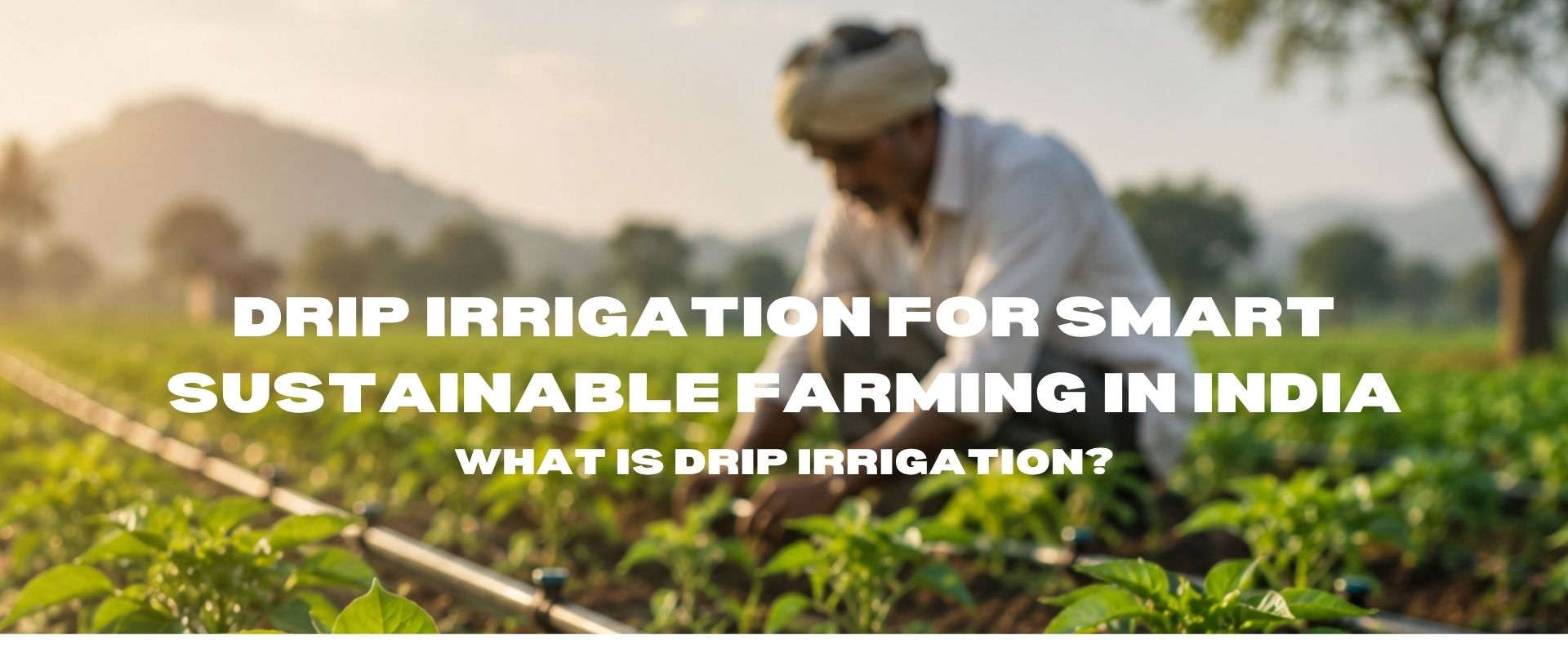
Water is the most valuable resource in agriculture, yet it is becoming increasingly scarce across many parts of India. At the same time, farmers are under constant pressure to produce higher yields to meet the growing food demand. This challenge has made drip irrigation in India one of the most effective and sustainable irrigation methods for modern farming. As a leading form of micro irrigation in India, it delivers water directly to the root zone of crops, helping farmers save water, improve crop productivity, and reduce cultivation costs through water conservation farming practices.
What is Drip Irrigation?
Drip irrigation is a micro-irrigation system that applies water slowly and precisely to the root zone of plants through a network of pipes, filters, valves, and emitters. Unlike traditional flood irrigation, where the entire field is submerged in water, drip irrigation supplies only the water the crop needs, exactly where it needs it. This ensures optimal soil moisture while minimizing water loss from evaporation, runoff, and deep percolation.
A typical drip irrigation system consists of a water source, pumping unit, filtration system, mainline and sub-main pipelines, drip laterals, emitters, drippers, control valves, and, when required, a fertigation unit for fertilizer application.
Benefits of Drip Irrigation
One of the biggest advantages of drip irrigation is water conservation in farming. Depending on the crop and soil conditions, it can reduce water consumption by 30 to 70 percent compared to conventional irrigation methods. This is especially important in regions where groundwater levels are declining, or irrigation water is limited.
Drip irrigation also improves crop productivity by maintaining a consistent moisture level around the root zone. Plants receive water at regular intervals, reducing stress caused by excessive dryness or overwatering. As a result, farmers often achieve 20–40% higher yields along with better crop quality.
Another significant benefit is the fertigation system, where water-soluble fertilizers are applied directly through the irrigation system. This ensures uniform nutrient distribution, improves fertilizer-use efficiency, reduces nutrient losses, and promotes healthier crop growth.
Since only the crop root zone is irrigated, the surrounding soil remains relatively dry, reducing weed growth and lowering the need for manual weeding or herbicide applications. Additionally, dry foliage helps reduce the incidence of fungal and bacterial diseases.
Quality Components of a Drip Irrigation System
The performance of a drip irrigation system depends greatly on the quality of its components. High-quality PVC or HDPE pipes, durable drip laterals, efficient filters, reliable valves, and precision-engineered emitters ensure uniform water distribution throughout the field.
Modern pressure-compensating emitters deliver a consistent discharge even on uneven terrain, while efficient filtration systems prevent clogging and ensure uninterrupted operation. Investing in quality irrigation equipment reduces maintenance costs and extends the lifespan of the system.
Government Support for Drip Irrigation
To promote efficient water use, the Government of India has encouraged farmers to adopt micro-irrigation under the Pradhan Mantri Krishi Sinchayee Yojana (PMKSY) through the Per Drop More Crop (PDMC) initiative. Financial assistance and awareness programs have accelerated the adoption of PMKSY drip irrigation in crops such as sugarcane, cotton, banana, grapes, pomegranate, vegetables, drip irrigation for vegetables, and fruit orchards.
This support has helped millions of farmers improve water-use efficiency while increasing agricultural productivity and profitability.
Drip Irrigation in Sugarcane Cultivation
Drip irrigation in sugarcane farming is one of the most impactful applications of this technology in India. Traditional flood irrigation often results in excessive water use, nutrient losses, and poor irrigation efficiency. Drip irrigation addresses these challenges by supplying water uniformly along the crop rows and enabling precise fertigation system application.
The technology promotes better tillering, healthier cane growth, improved sugar recovery, and significant savings in water and fertilizers. Many sugar factories and farmer-producer organizations are now adopting community-based drip irrigation projects to improve water management and increase cane productivity.
The Future of Smart Drip Irrigation Technology
Modern precision irrigation farming is evolving rapidly with the integration of advanced technologies such as soil moisture sensors, automatic irrigation controllers, weather-based scheduling, IoT-enabled monitoring systems, and solar-powered pumping solutions. These innovations enable farmers to monitor irrigation remotely, apply water more accurately, and reduce labour requirements while improving resource-use efficiency.
Why Every Indian Farmer Should Switch to Drip Irrigation
Drip irrigation is no longer just an alternative irrigation method; it has become an essential technology for sustainable irrigation in India. It helps farmers save water, improve fertilizer efficiency, increase crop yields, and reduce production costs while protecting valuable natural resources.
As climate change and water scarcity continue to challenge Indian agriculture, investing in a scientifically designed, high-quality drip irrigation system is one of the most effective decisions a farmer can make. With reliable irrigation solutions, proper agronomical guidance, and regular technical support, drip irrigation can transform farming into a more productive, profitable, and sustainable enterprise for future generations.
If you are looking for high-quality drip irrigation systems and irrigation solutions, explore Kothari Group’s complete range of micro irrigation products designed to help Indian farmers achieve more with every drop of water.