

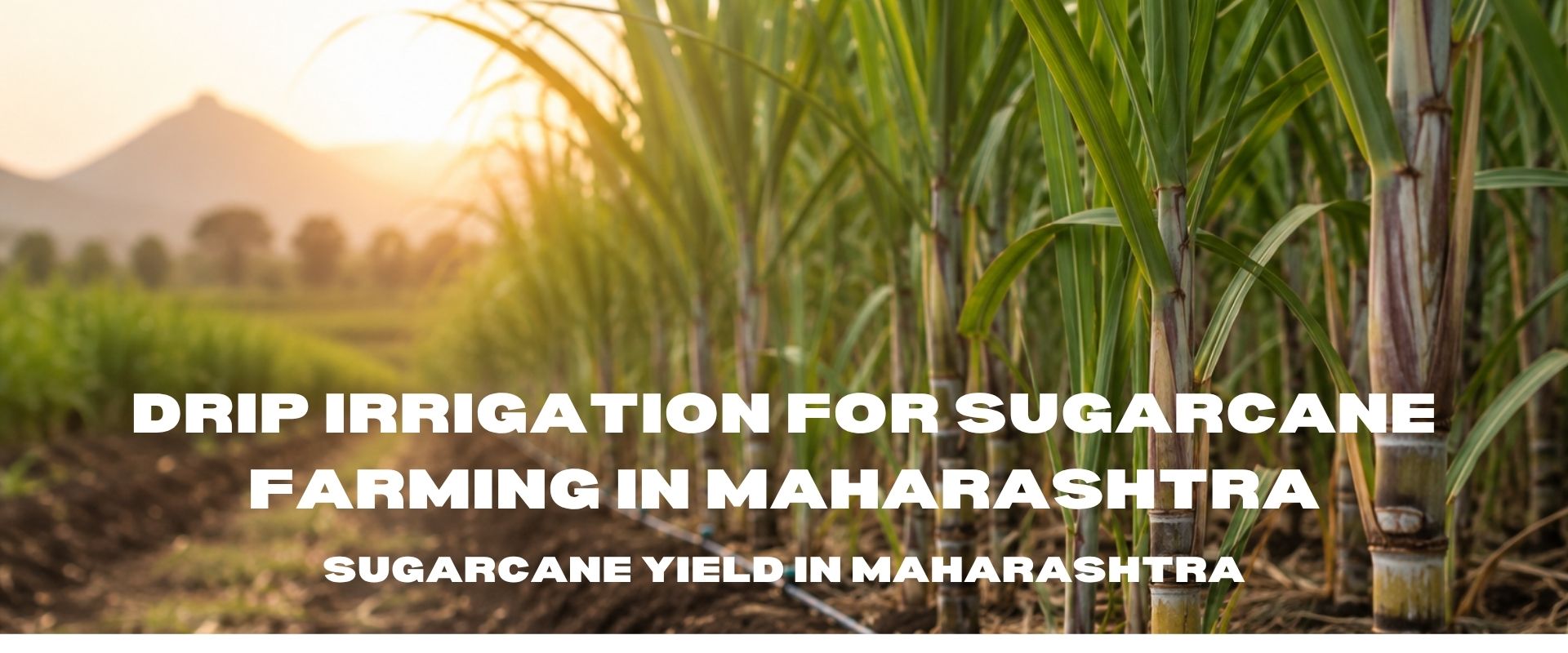
Maharashtra’s sugarcane fields stretch across nearly 11–12 lakh hectares, powering both the state’s rural economy and the backbone of India’s cooperative sugar industry. With over 170 sugar factories, cooperative and private, the crop provides jobs to millions of farmers, keeps thousands of transporters and laborers busy, and brings in a hefty chunk of agricultural revenue. Yet despite this scale, the conversation around drip irrigation sugarcane in Maharashtra is becoming increasingly urgent as water mismanagement continues to erode productivity and profits across the state.
But behind the numbers, things aren’t as rosy as they look. Costs keep going up every year, yet most regions see disappointing cane yields and sugar recovery, way below what’s possible. The real problem isn’t the crop itself. It’s how the water is managed. The old flood irrigation method, so common here, is now one of the biggest roadblocks to sustainable, profitable sugarcane farming.
Sugarcane Yield in Maharashtra: Why Productivity Varies
Productivity really isn’t uniform. You’ll see sugarcane yield in Maharashtra swing wildly depending on where you are and how the fields are watered.
- In Western Maharashtra, farmers average 100–120 MT/ha.
- Marathwada lands see 75–90 MT/ha.
- Vidarbha lags with 65–80 MT/ha.
- The top growers, those who use modern irrigation technology in India and smart nutrient management, pull in more than 140 MT/ha.
- Meanwhile, many who stick with traditional methods struggle to make 70–80 MT/ha.
So it’s obvious: water management makes or breaks productivity, not the crop’s genetics.
Flood Irrigation Problems Hurting Maharashtra Sugarcane Farmers
What really trips things up is excess irrigation. Flooding the fields is the old-school way. That’s how it’s always been done. But recent studies make it clear that pouring on too much water is a silent culprit behind low yields, soil problems, and rising costs. Understanding flood irrigation problems is the first step toward fixing them.
Sugarcane gets 3,200–3,500 mm of water in flood irrigation cycles, though it honestly doesn’t need anywhere near that much. Most of the water ends up lost to runoff, evaporation, or just seeping away, taking precious resources with it.
Too much water causes a whole bunch of problems:
- Water collects around roots, which leads to soggy soil.
- Soil loses aeration, making it harder for roots to breathe.
- Nutrients get washed out, moving past where roots can reach them.
- Weeds thrive, outcompeting the crop.
- Insects and diseases become more common.
- Fertilizer becomes less effective.
- Costs pile up for pumping and additional labor.
Bottom line: instead of boosting output, excess water slowly weakens the crop and pushes expenses even higher. Improving water management sugarcane practices is no longer optional — it is essential for long-term farm viability. Reliable Agriculture Pipes & Fittings can play a key role in building more efficient water delivery systems on the farm.
Soil Health in Sugarcane Farming: The Hidden Cost of Flood Irrigation
Flood irrigation doesn’t just hit yields. It’s terrible for soil health in sugarcane farming. Continuous overwatering strips away nutrients, slows down helpful microbes, and packs the soil tight. Salts build up, making the ground harder and harder for plants to use. As soil productivity tanks, farmers dump on more fertilizers to compensate, which costs more but doesn’t always pay off. It’s a nasty cycle: declining soil, rising prices, lackluster returns.
Drip Irrigation Sugarcane Maharashtra: The Real Solution
So what actually works? Drip irrigation farming in India has proven time and again to be the answer. It’s not just hype. With drip, water goes straight to the root zone in controlled amounts, and nearly every drop gets used. Studies and trials in Maharashtra show that drip systems cut water use in half, dropping it from 3,200–3,500 mm per cycle down to just 1,400–1,500 mm. That’s a huge savings in sugarcane water use efficiency. And it’s not just about water. Crops grow better. Yields go up. Sugar recovery in Maharashtra improves significantly.
The sugarcane drip system benefits are wide-ranging and backed by real field results:
- Farmers see higher cane yields.
- Sugar recovery goes up, which means sweeter profits.
- Growth is uniform; tillering improves.
- Fertigation sugarcane — fertilizers go in with the water, more efficient, less waste. Explore Fertigation Machines for precise nutrient delivery.
- Weed growth drops, so labor needs decrease.
- Plant roots develop stronger and healthier.
- Soil stays fertile, salinity stays low.
- Energy costs for pumping go down.
And let’s not forget: cooperative sugar factories in Maharashtra benefit too, thanks to a steady flow of quality cane with better sucrose content. A well-designed Drip Irrigation System makes all of this possible at scale.
Why Maharashtra Sugar Industry Must Embrace Drip Irrigation Now
Looking at the future, water shortages and unpredictable weather aren’t going anywhere. Relying on outdated sugarcane irrigation methods in Maharashtra isn’t an option anymore. The Maharashtra sugar industry has to embrace scientific water management and modern irrigation tech, including precision Filters & Injectors that ensure consistent water and nutrient delivery across the field.
Drip irrigation benefits go beyond just saving water. It’s a whole crop management system. It boosts efficiency, keeps soils healthy, makes fertilizers more effective, and ramps up profits.
The Future of Sugarcane Farming Productivity in Maharashtra
So, if you ask what’s holding Maharashtra’s sugarcane sector back, it’s not the crop. It’s poor irrigation. Flooding fields brings more problems than solutions: wasted water, depleted soils, rising salinity, higher costs, lower yields, and less sugar.
Drip irrigation fixes all that. It sends the water right where it matters, cuts usage by more than half, strengthens crop performance, and protects soil for the long haul.
For Maharashtra’s sugarcane farming productivity to stay sustainable, drip irrigation farming in India shouldn’t be just an option. It needs to become the norm. Every bit of water saved means better yields, healthier soil, and a brighter, more profitable future for farmers and factories.
Looking for reliable drip irrigation solutions for your sugarcane farm? Explore Kothari Group’s complete range of drip irrigation systems designed specifically for Indian farmers.