
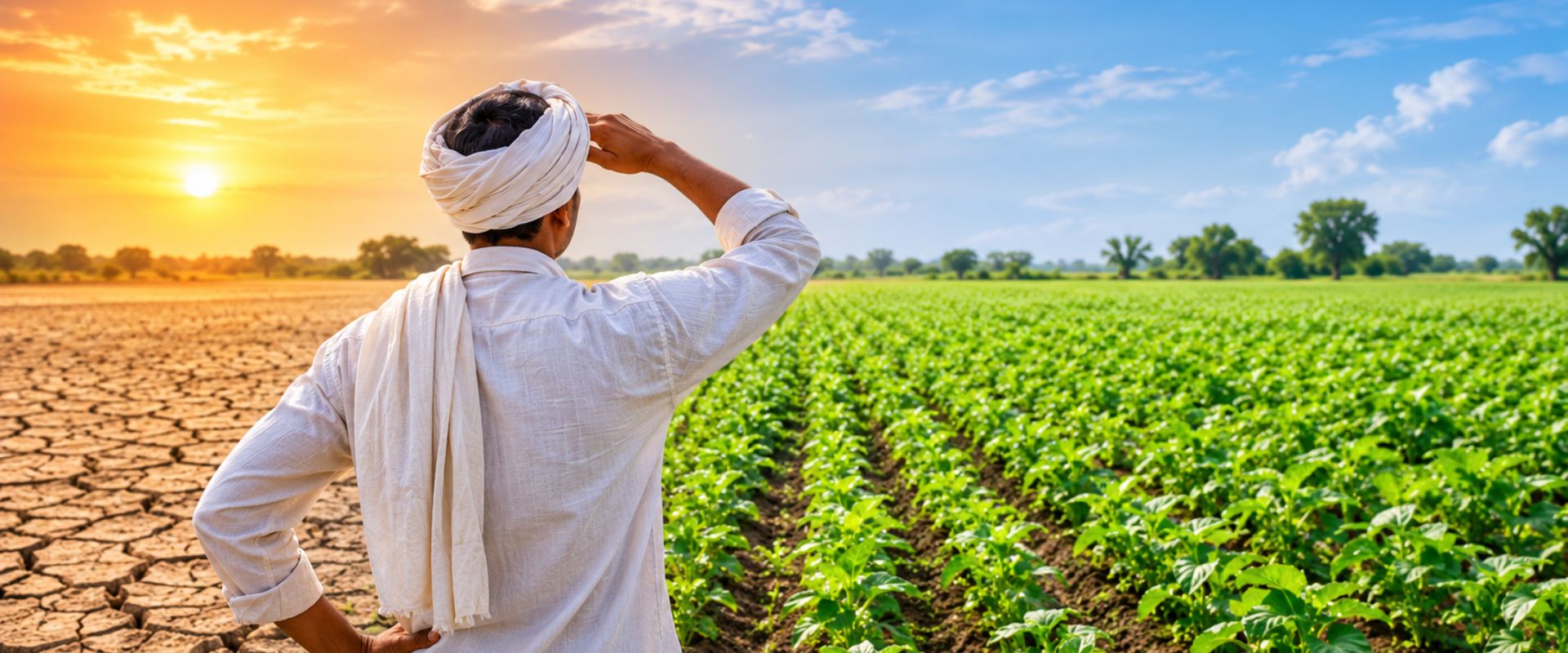
A strong El Niño is building in 2026, which is a good reason for Indian farmers to plan their water use. NOAA’s Climate Prediction Center has an El Niño Advisory in effect. Its 12 November 2026 update says a strong-to-very-strong El Niño is likely through January–March 2027, with a greater than 79% chance.
That does not mean India will have a poor monsoon. NOAA itself says El Niño impacts are more likely, but not guaranteed. A dry spell is still worth planning for. This guide explains El Niño, what it has meant for the Indian monsoon, and how smart irrigation helps you use water wisely if rain falls short.
What Is El Niño?
El Niño is a warming of the central and eastern tropical Pacific Ocean. It begins when the trade winds weaken. These winds normally push warm surface water west, toward Asia. When they ease, the warm water spreads east instead.
This shift changes how heat and moisture move through the atmosphere. Rainfall patterns then change in many parts of the world, including India.
Strength matters too. In its 12 November update, NOAA reported sea surface temperatures in parts of the eastern equatorial Pacific more than 4°C above average.
El Niño and the Indian Monsoon: It’s Not Automatic
El Niño tilts the odds toward a weaker monsoon. It does not decide the outcome. Other factors matter, including the Indian Ocean Dipole (IOD), which is the temperature difference between the western and eastern Indian Ocean.
Past years show the range:
- 1997: one of the strongest El Niño events on record, yet the monsoon was near normal. A positive IOD helped shield India’s rain.
- 2015: a strong El Niño year with a deficient monsoon and drought across India.
- 2023: El Niño developed, and the season ended at 94.4% of the long period average, which IMD classed as normal. IMD said positive factors countered El Niño. Even so, August 2023 was the driest August on record, with a 36% rainfall deficit.
The 2026 season was weaker. According to IMD, June–September rainfall was 87% of the long period average. By region, Northwest India received 94%, Central India 97%, the South Peninsula 76% and Northeast India 74%. June was the weakest month at 65% of normal, while July came in near normal at 101%.
Two lessons follow. A season total can hide weak months and weak regions. And a forecast gives odds, not certainty. Plan around the rain your own district receives.
What a Dry Year Does on the Farm
A dry year can bring several problems at once:
- Lower soil moisture, especially at critical growth stages
- Lower reservoir inflows
- Less groundwater recharge
- Higher irrigation demand
- More pumping energy
The effect depends on your region, your crop and the timing of the dry spell.
How Smart Irrigation Helps
Smart irrigation answers three questions: how much water a crop needs, when to apply it, and where it should go. Instead of watering on a fixed routine, the farmer responds to the crop and the weather.
Soil-moisture sensors show what is happening in the root zone. Weather-based scheduling adjusts watering to conditions. Drip irrigation delivers the water close to the roots, and automation runs the schedule.
To learn more, read our posts on drip irrigation for smart and sustainable farming and the benefits of automated irrigation systems. For the wider picture, see why micro irrigation matters in India’s water crisis.
Checklist: Preparing Your Farm for a Dry Spell
Work through these checks before a dry spell begins, and again if one arrives:
- Check your water source and pump. Know how much water you can count on, and service the pump before you need it.
- Irrigate by crop stage. The El Niño advisory from ICAR-IIMR suggests light irrigation at critical growth stages, based on the water available.
- Inspect filters and laterals. Clogged filters and blocked drip lines cause uneven watering, and water is too scarce to waste.
- Plan fertigation with your irrigation schedule. Apply nutrients when the soil has enough moisture for the crop to use them.
- Watch IMD and local advisories. The same ICAR advisory points farmers to the agromet advisory bulletins issued by their local Krishi Vigyan Kendra (KVK).
How Kothari Can Help
Kothari makes drip irrigation systems, fertigation machines and automation systems for Indian farms. Our drip irrigation system is designed to work with fertigation, and our automation range can be integrated with drip and sprinkler systems.
Explore our drip irrigation system range, fertigation machines and automation systems.
Conclusion
El Niño may or may not cut your rain, but a farm that plans its water ahead is better placed either way. Contact the Kothari Group team to plan an irrigation setup that suits your crop, soil and water source.
Frequently Asked Questions
What is El Niño?
El Niño is a warming of the central and eastern tropical Pacific Ocean that happens when the trade winds weaken. It can change weather patterns in many parts of the world, including India.
Does El Niño always cause a weak monsoon in India?
No. El Niño years are generally linked to a higher chance of below-normal monsoon rainfall, but the link isn’t absolute. Some El Niño years have had normal or above-normal rainfall, and other factors such as the Indian Ocean Dipole also matter.
Is there an El Niño in 2026?
Yes. NOAA’s Climate Prediction Center had an El Niño Advisory in effect as of its 12 November 2026 update, which said a strong-to-very-strong event was likely through January–March 2027.
How can El Niño affect Indian farming?
Lower rainfall can mean less soil moisture, lower reservoir inflows and less groundwater recharge, which raises irrigation and pumping demand. The effect depends on the region and the season.
How can drip irrigation help during water stress?
Drip irrigation delivers water close to the crop’s roots, which can reduce losses from evaporation and runoff compared with flood irrigation. Results vary with crop, soil, system design and management.
What is smart irrigation?
Smart irrigation combines efficient water delivery with monitoring and scheduling, so farmers decide how much water a crop needs, when, and where to apply it.