

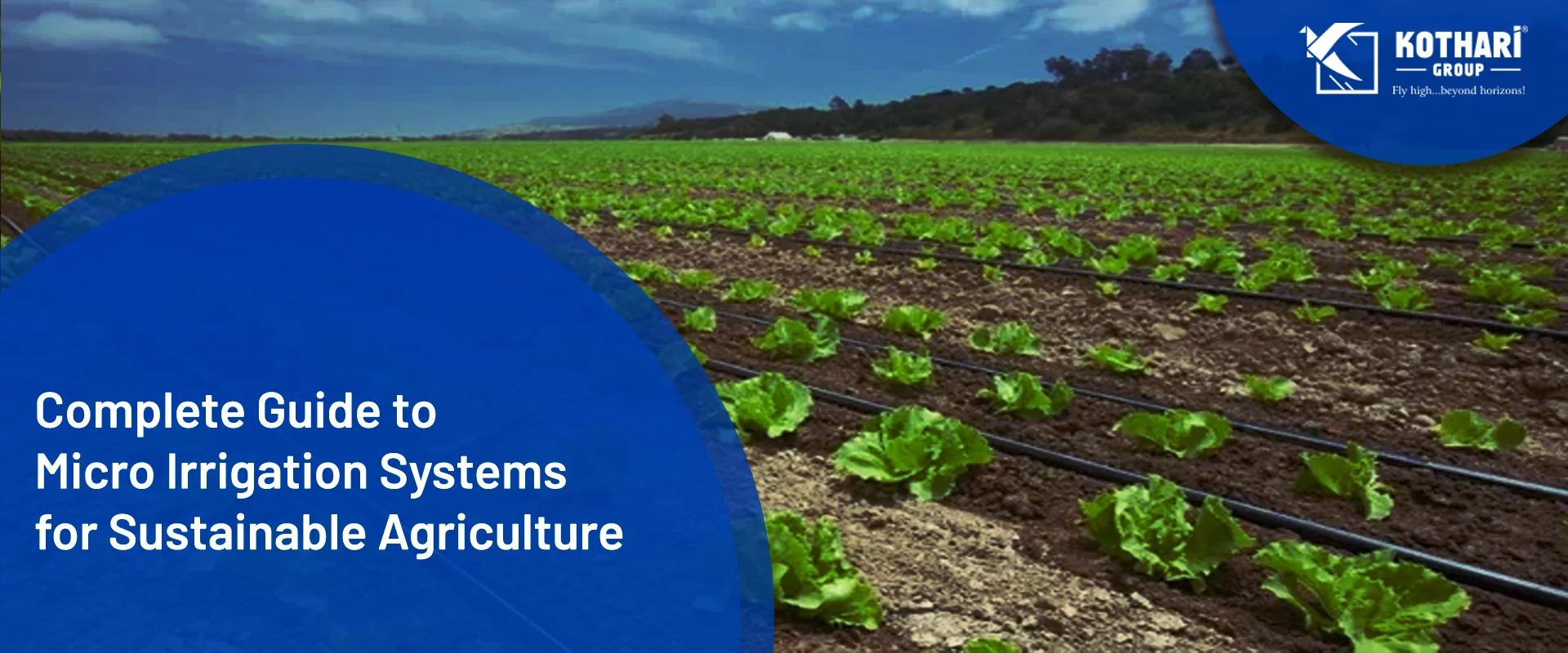
Without proper irrigation, farming can quickly become unpredictable and difficult. Since old times, farmers have heavily depended on weather and other traditional irrigation methods. But modern farming is more about doing more with fewer efforts and costs. Here’s how micro irrigation systems play a crucial role.
In this blog, we will understand the micro irrigation system in detail and the steps to ensure sustainable agriculture.
What is a Micro Irrigation System?
Micro irrigation system is an irrigation process specifically designed to supply water in controlled amounts. It is different from traditional irrigation methods. Instead of flooding entire fields, the systems deliver the right amount of water at the right time.
Also, the best part is that these systems can be adapted to the type of soil, crops, and farm sizes as required. That’s the reason why micro irrigation systems are emerging as a practical option across the world.
Types of Micro Irrigation System
Micro Sprinkler System
Micro sprinkler systems work just like rainfall. In this process, water is sprayed in fine droplets over a specific area. It makes it useful for crops that require uniform moisture.
Therefore, micro sprinkler systems can also be used among nurseries, orchards, and closely spaced crops. This system ensures even water distribution without overwatering any part of the field.
Drip Irrigation System
Drip irrigation Systems are widely used for their precision. These systems include a network of pipes, connectors, emitters, and filters to directly deliver water to the root areas.
However, the performance of these systems depends on the quality of every component:
- Emitter ensures uniform distribution
- Driplines control water flow
- Pipes carry water across the field
- Filters prevent clogging
A well-designed system comprises these well-designed products, which help in maintaining a steady flow, reducing blockages, and also perform reliably across different crop cycles. Hence, manufacturers like Kothari Pipes stand out, offering durable and reliable components known for their consistent performance under real farm conditions.
Choosing the Right Drip Irrigation Companies
When it comes to drip irrigation systems, not all drip irrigation companies offer the same level of quality. The difference lies in design, durability, and long-term performance.
Farmers need to ensure they choose those irrigation equipment suppliers that focus on consistent water output, strong materials, and systems suited for different crops and soil types.
Why Micro Irrigation is a Sustainable Choice
Micro irrigation systems not only help in saving water. They help in improving the overall efficiency of farming operations.
- Reduces manual effort
- Crops receive consistent moisture
- Water is delivered directly to the root zone
- Evaporation and runoff are minimized
Therefore, as water resources are limited, adopting these efficient systems is becoming essential rather than optional.
Conclusion
Irrigation is not just about supplying water; it is also about using it with precision. Drip irrigation systems bring control into a process that previously relied on estimation.
Whether it is a micro sprinkler system for wider coverage or drip irrigation products for targeted watering, the real value depends on how well the system is performing. Because in the long run, the main goal is to achieve consistency in crop growth, efficient use of water, and a system that doesn’t require regular fixing.
FAQs
- How to choose the right drip irrigation products for farms?
Selecting the right drip irrigation products depends on factors such as soil conditions, crop type, and most importantly, water quality. It’s crucial to select clog-resistant emitters, durable pipes, and proper filtration systems that ensure long-term performance.
- What is a micro irrigation system, and how does it work?
A micro irrigation system transfers the water directly to the root areas of the plant. It delivers water in small and controlled quantities. It uses pipes, emitters, and filters, which ensure water is distributed evenly and improve crop health.
- Can a micro irrigation system help reduce labour costs?
Yes, micro irrigation systems also help in reducing the need for constant manual monitoring. Many drip irrigation system suppliers like Kothari Pipes offer automation options, which include timers and controllers, which make irrigation easier to manage and save time and labour.
- What is the difference between a micro sprinkler system and drip irrigation?
A micro sprinkler system sprays water in a wider area in fine droplets, which makes it suitable for crops like orchards. On the other hand, drip irrigation products deliver water directly to the roots, which offers more precise and targeted irrigation.