

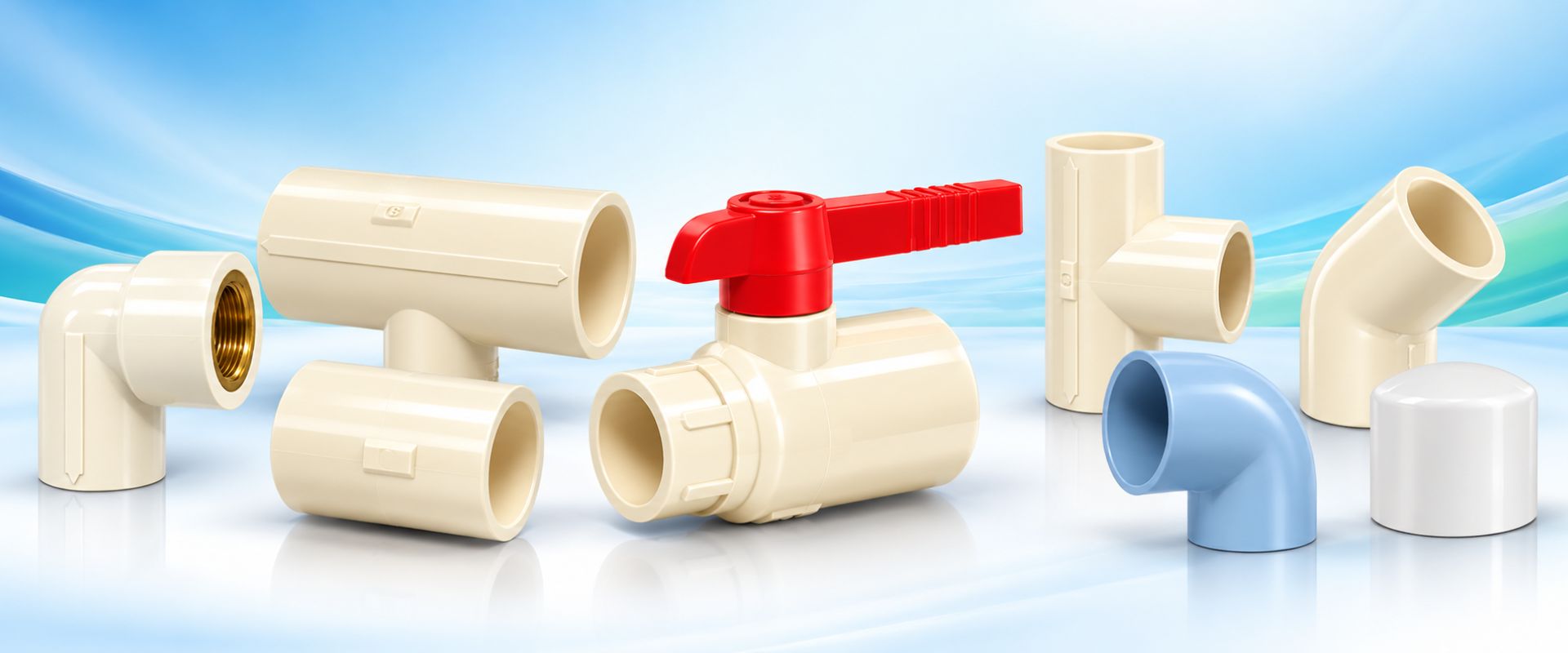
A pipe fitting is a part that connects, turns, splits, joins or closes pipes in a plumbing, drainage or irrigation system. Pipes carry the water, but fittings decide where it goes. A system with good pipes and the wrong fittings will still leak, restrict flow or be hard to repair.
This guide explains the common pipe fittings in plain language, with their names and uses. It is written for homeowners, plumbers, builders, students and dealers who want to understand plumbing fittings names and choose the right part.
Quick Answer: Common Pipe Fittings and What They Do
- Elbow: turns the pipe in a new direction.
- Tee: splits one flow into two, or joins two flows into one.
- Cross tee: a four-way junction.
- Coupler: joins two pipes in a straight line.
- Reducer: connects pipes of different sizes.
- Union: lets you disconnect a section for repair.
- Ball valve: controls whether water flows or stops.
- End cap and plug: close an open end or opening.
- Adaptor: converts one type of connection to another.
The Main Types of Pipe Fittings
Here is a closer look at each of the types of pipe fittings, with where it is used.
Elbow (90° and 45°)
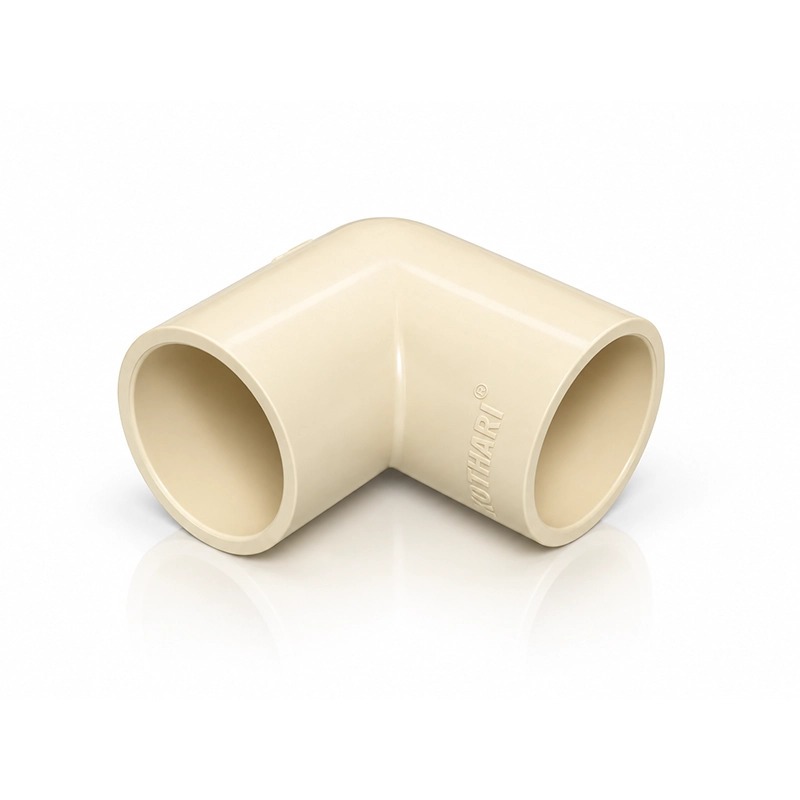
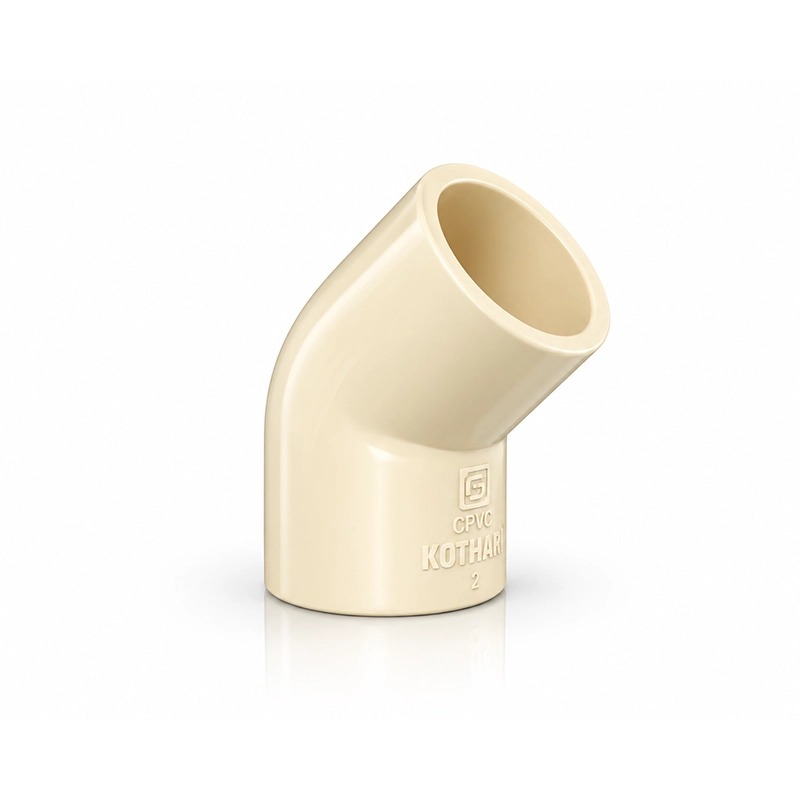
An elbow changes the direction of a pipe run. A 90° elbow makes a sharp, right-angle turn. A 45° elbow makes a gentler bend. Elbows are used wherever a pipe must go around a corner, up a wall or along a ceiling.
Kothari’s CPVC and UPVC ranges include 90° and 45° elbows. There is also a reducing elbow, which turns the pipe and joins two different sizes at the same time. The UPVC range also lists a 3-way elbow.
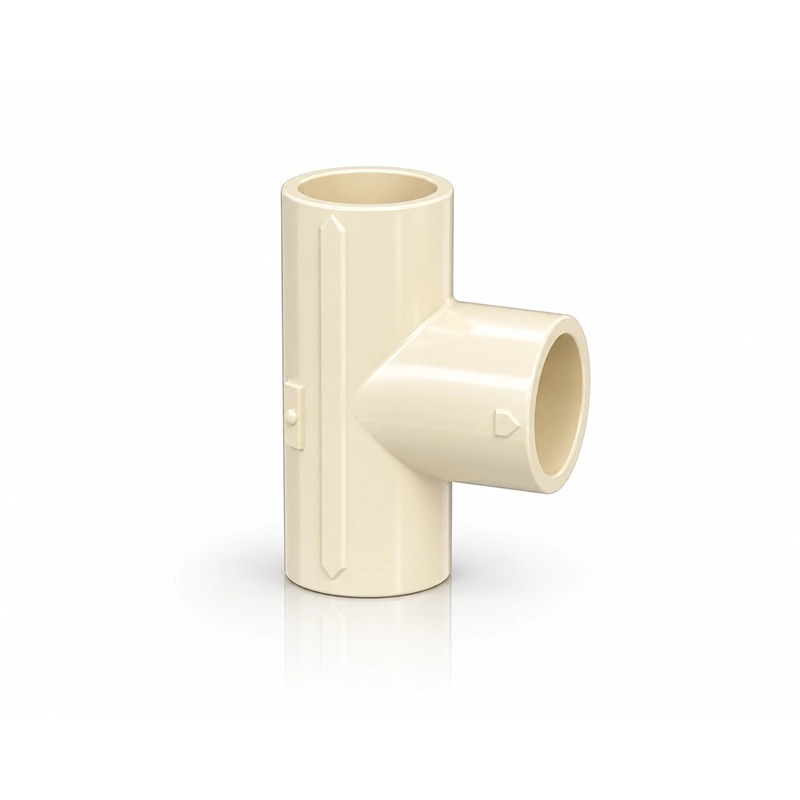
Tee (Equal and Reducing)
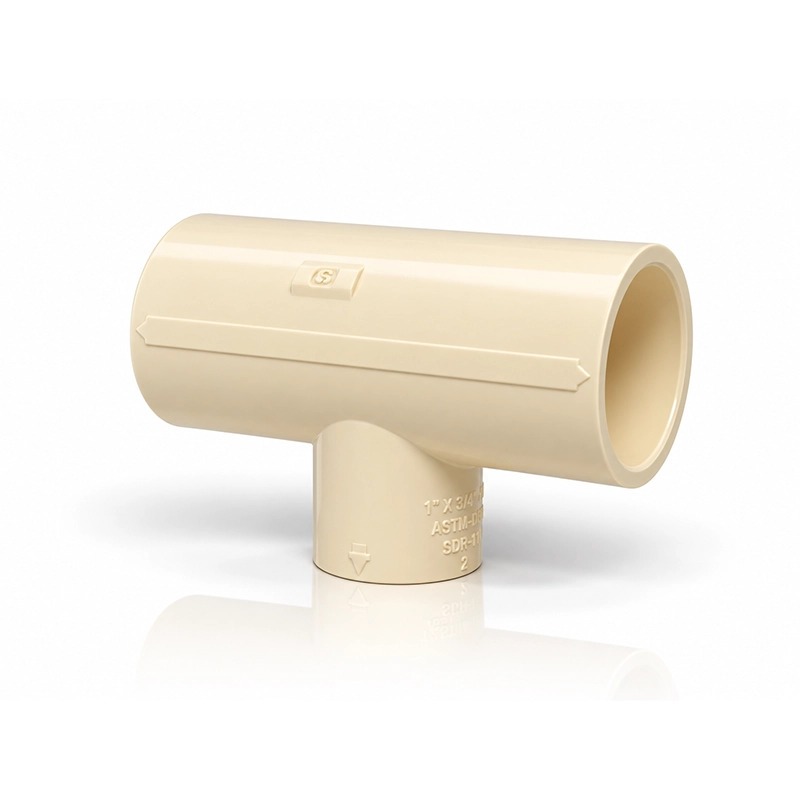
A tee has three openings. It splits one line into two, or brings two lines together into one. Plumbers use a tee when they need a branch off a main line, such as a feed to a washbasin.
An equal tee has three openings of the same size. A reducing tee (called a reducer tee in the CPVC range) has a branch of a different size. Both CPVC and UPVC ranges include them.
Cross Tee
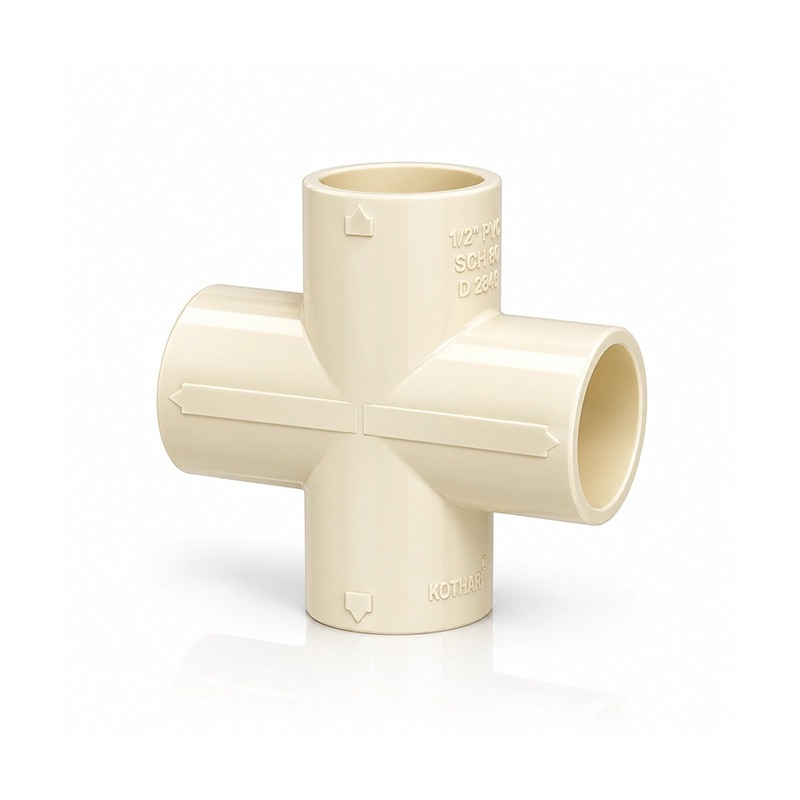
A cross tee has four openings, so it joins four pipes at one point. It is less common than a tee. Kothari’s CPVC range includes a cross tee.
Coupler
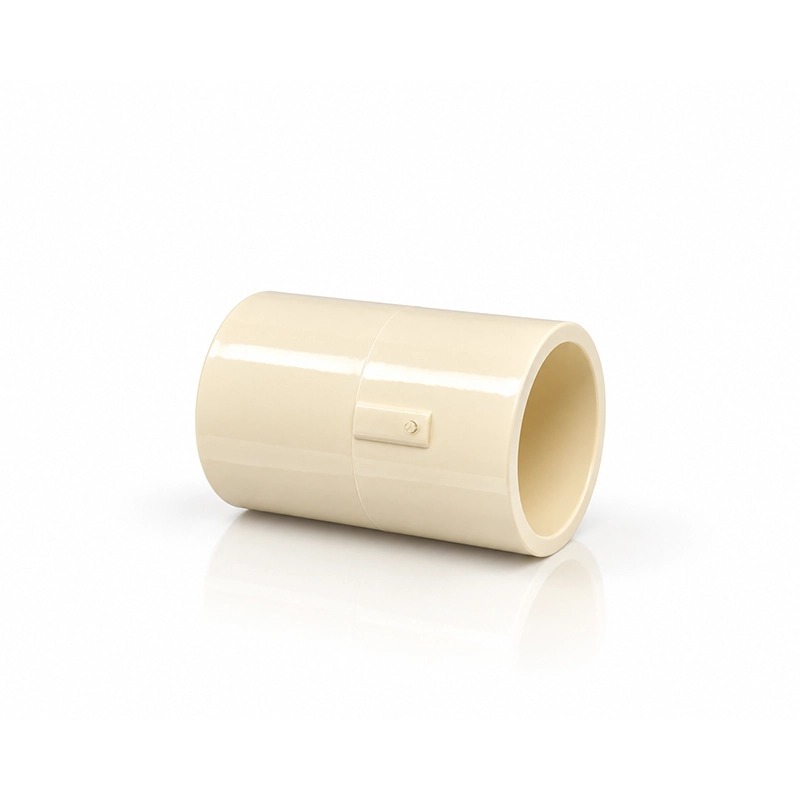
A coupler joins two pipes end to end in a straight line. You use it to extend a pipe or to repair a section that was cut out. A reducer coupler does the same job for two pipes of different sizes. Both appear in the CPVC range, and the UPVC range includes a coupler.
Reducer
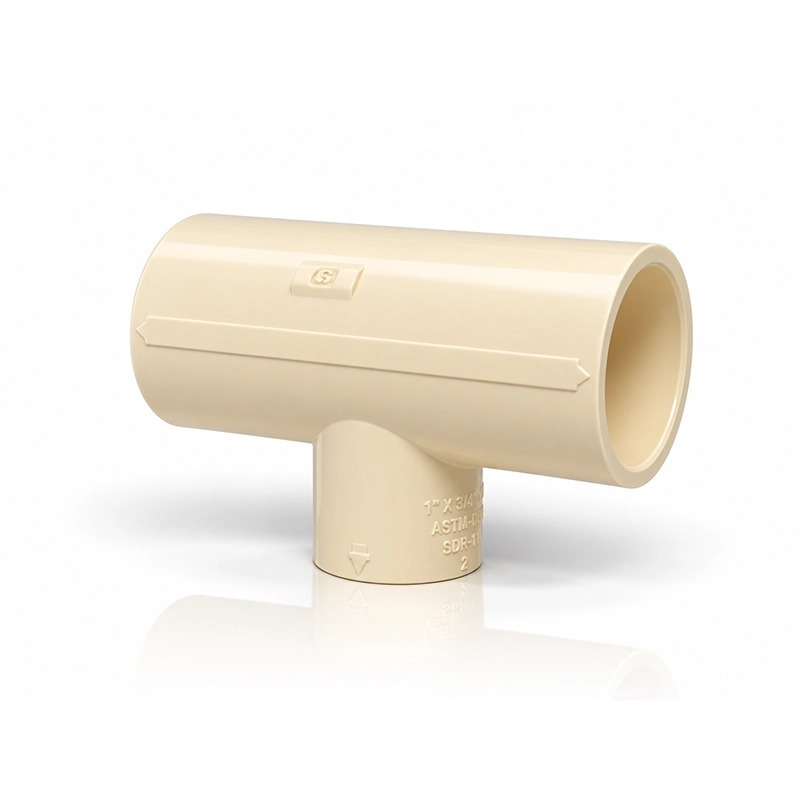
A reducer connects pipes of different sizes. It lets a larger pipe step down to a smaller one, or the other way round. Some fittings combine this with another job. A reducing elbow turns the line while changing size, and a reducing tee branches off at a different size.
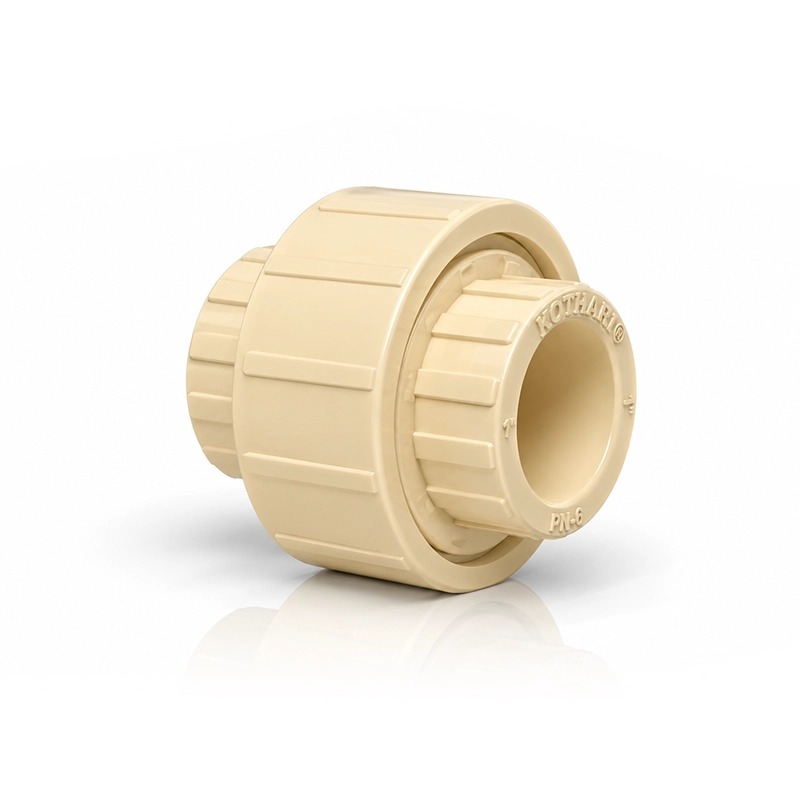
Union
A union lets you disconnect a section of pipe without cutting it. This is useful for parts you may need to remove, such as a valve. Kothari’s UPVC ball valve is a union type.
Ball Valve
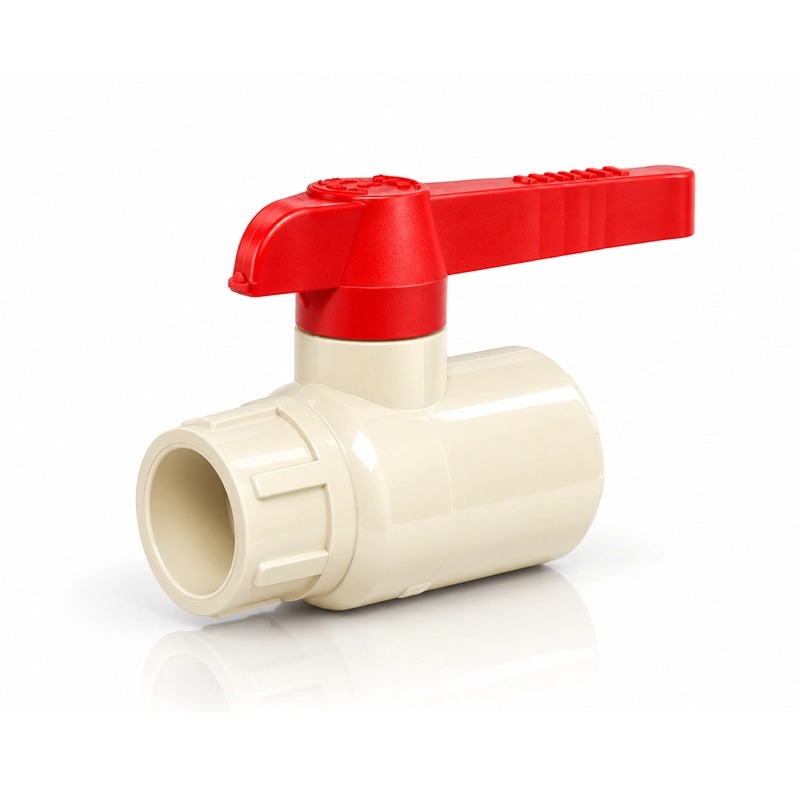
A ball valve controls the flow. You turn the handle to open or close the line. Plumbers fit one so they can shut off water to a section for repair. Kothari’s CPVC range includes a CPVC ball valve, and the UPVC range includes a union-type ball valve.
End Cap
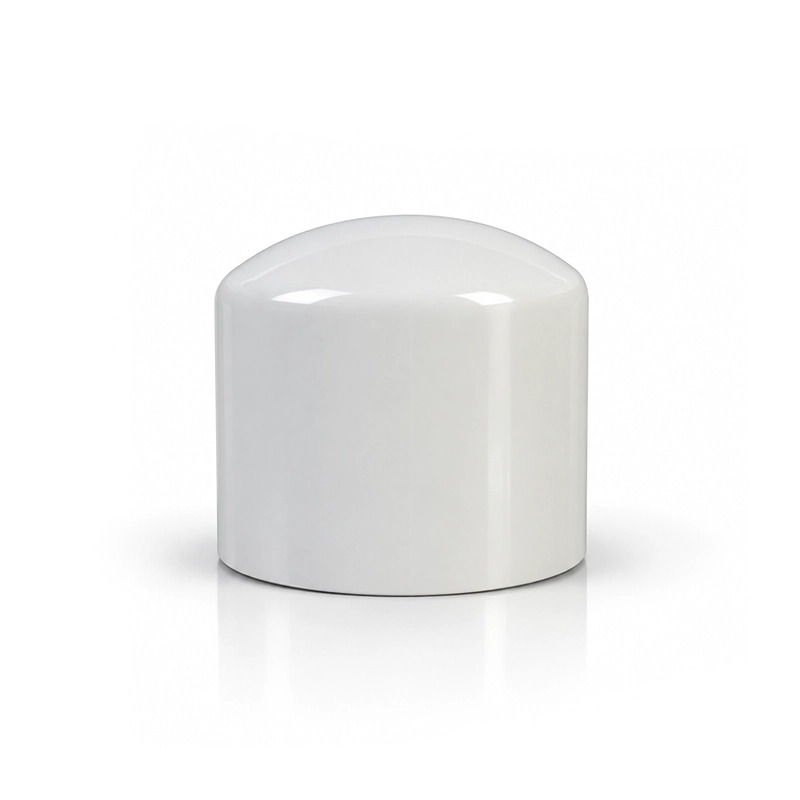
An end cap closes the end of a pipe.
Brass Fittings
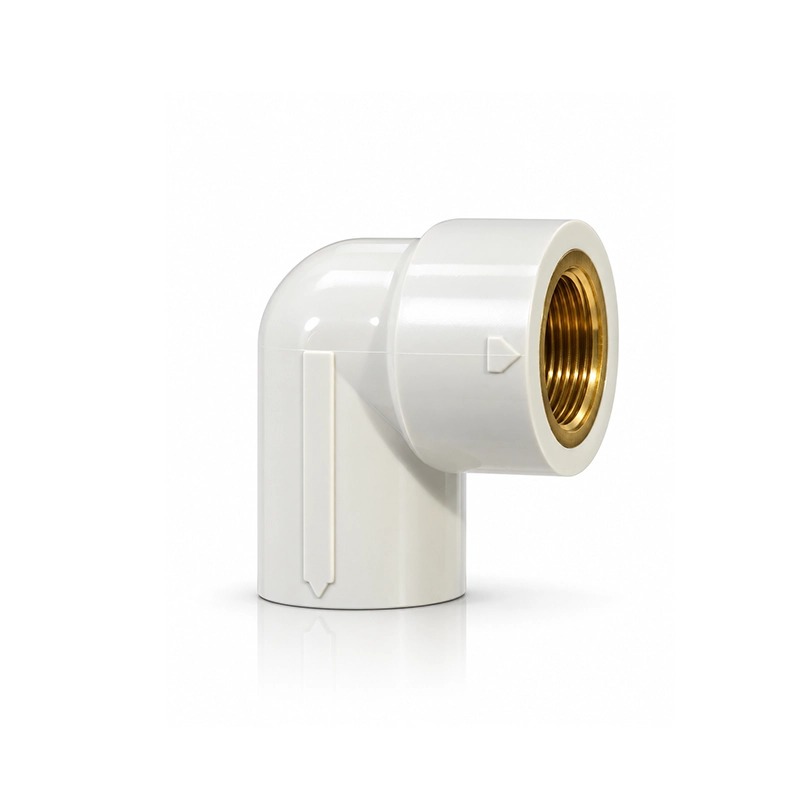
An adaptor converts one type of connection to another. Kothari’s CPVC and UPVC ranges include a brass tee and a brass 90 ° elbow. The CPVC range also includes a 3-in-1 wall mixer adaptor, used where the pipe meets a wall mixer, which is a tap that blends hot and cold water.
Fittings by System
Different systems use different fittings. Here is how Kothari’s pipe ranges map to each one.
Plumbing: CPVC and UPVC Fittings
CPVC fittings are for hot and cold water plumbing. UPVC fittings are for cold water plumbing. This table shows what each range lists on our website.
| Fitting | CPVC | UPVC |
| Elbow 90° | Yes | Yes |
| Elbow 45° | Yes | Yes |
| Reducing elbow | Yes | Yes (reducing elbow 90°) |
| 3-way elbow | — | Yes |
| Equal tee | Yes | Yes |
| Reducing tee | Yes (reducer tee) | Yes |
| Cross tee | Yes | — |
| Coupler | Yes | Yes |
| Reducer coupler | Yes | — |
| Ball valve | Yes | Yes (union type) |
| Brass tee | Yes | Yes |
| Brass elbow 90° | Yes | Yes |
| 3-in-1 wall mixer adaptor | Yes | — |
A dash means the fitting is not listed for that range on our website. Ask our team if you need something not shown.
You can browse the UPVC pressure pipes and fittings. Not sure which material suits your line? Read our CPVC vs UPVC guide.
Drainage: SWR and Underground Fittings
Kothari pipe offers SWR (soil, waste and rainwater) and underground drainage pipes and fittings. Drainage lines carry waste and rainwater away from a building, so their fittings must turn and join lines without blocking the flow. Read more in our post on PVC drainage fittings and clean plumbing, or see our SWR and drainage pipes and fittings.
How Fittings Are Joined
A fitting is only as good as its joint. There are three common ways to join pipes and fittings:
- Solvent cement joints. Solvent cement bonds the pipe to the fitting so they act as one piece. Kothari offers CPVC solvent cement, and a solvent system is available for UPVC.
- Threaded joints. The parts screw together. Plumbers often use this where parts may need to be removed.
- Rubber ring joints. The pipe end pushes into a socket sealed by a rubber ring. Kothari’s agri range includes rubber ring repair couplers.
Kothari pipes CPVC brass fittings have dual O-rings to help lock out leaks. The CPVC fittings also use an alignment line design for straight installation, and an arrow printed on the CPVC pipe shows flow direction. For more on getting joints right, read our post on common PVC and CPVC pipe installation mistakes.
How to Choose the Right Fittings
Follow these steps:
- Match the fitting to the pipe material. Use CPVC fittings with CPVC pipe and UPVC fittings with UPVC pipe.
- Choose the type for your layout. Think about where the line turns, branches or needs a shut-off.
- Check the quality marks. Look for clear markings and ask your dealer what they mean.
- Buy the pipe, fittings and cement as one system. They are made to work together.
- Ask your plumber or our team. They can match fittings to your layout.
For more help choosing pipes, read our guide on how to select the right pipes for your plumbing needs. Kothari’s CPVC pipes and fittings are ISI-marked, and the company lists ISO, BIS and RoHS lead-free formulation among its certifications.
Common Mistakes With Pipe Fittings
- Using the wrong fitting material. A fitting made for one material should not be assumed to suit another.
- Making poor joints. A joint that is rushed or not fully set can leak later.
- Ignoring flow direction. Check the arrow printed on the pipe so the line is laid the right way.
- Skipping the alignment line. On fittings with an alignment line, use it to keep the run straight.
Conclusion: The Right Fitting Keeps the System Working
Fittings are small parts with a big job. Know what each one does, match it to your pipe material, and join it properly. That is how you get a plumbing, drainage or irrigation system that works well for years.
If you need help choosing fittings, contact the Kothari Group team.
Frequently Asked Questions
What are pipe fittings?
Pipe fittings are parts that connect, turn, split, join or close pipes in a plumbing, drainage or irrigation system. Common examples include elbows, tees, couplers and valves.
What are the main types of plumbing fittings?
The main types are elbows, tees, cross tees, couplers, reducers, unions, valves, end caps and adaptors. Each does a different job, such as changing direction, branching a line or controlling flow.
What is the difference between a coupler and a reducer?
A coupler joins two pipes of the same size in a straight line. A reducer connects pipes of different sizes. A reducer coupler joins two pipes of different sizes in a straight line.
What does a union do?
A union lets you disconnect a section of pipe without cutting it. This makes repair or replacement of parts such as valves easier. Kothari’s UPVC ball valve is a union type.
Can CPVC and UPVC fittings be mixed?
The safe approach is to match the fitting to the pipe material, with CPVC fittings on CPVC pipe and UPVC fittings on UPVC pipe.
What fittings are used in drainage systems?
Drainage systems use fittings that turn and join the lines, such as bends and junctions. Kothari pipes offers SWR and underground drainage pipes and fittings. Read our post on PVC drainage fittings for more.