

If you’ve got an irrigation pump, a borewell, or a dewatering setup, you know the one piece that really matters: the suction line. A PVC suction hose pipe is what actually draws the water from the source into the pump. If your suction hose collapses under vacuum or cracks after a few months, you don’t just lose water you lose time, money, and, honestly, a bit of patience.
Picking the wrong hose is a classic mistake, one that almost everyone makes at least once. Maybe it folds up halfway through the season, maybe it’s toast after one summer. Suddenly, there’s downtime, bills, and a grumpy team. So let’s break down what a PVC suction hose really is, the types of PVC suction hose you’ll find, where each one fits, and what really matters when you’re buying.
What Is a PVC Suction Hose Pipe?
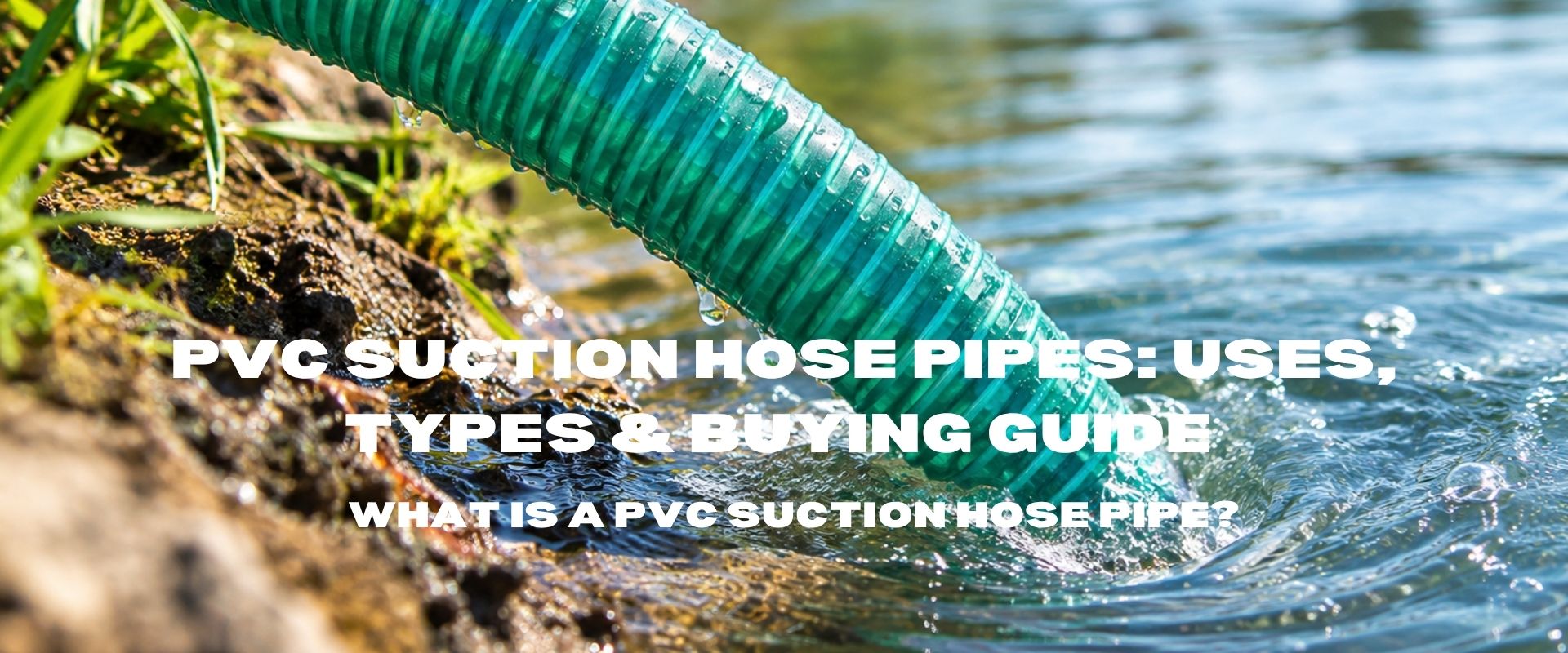
A PVC suction hose pipe isn’t just any old flexible tube, it’s got a rigid PVC spiral running through its wall, giving it the backbone to stand up to suction and vacuum. That spiral is what keeps the hose from collapsing when the pump starts tugging water through it. Regular PVC tubing? It just can’t hold its shape like this.
Types of PVC Suction and Flexible Hose Pipes
Not every hose in this family is built for the same job. Here’s the lineup:
| Type | Construction | Best Suited For |
| PVC Suction Hose | Rigid PVC spiral inside a flexible PVC wall | Pump suction lines, borewell work, serious dewatering |
| PVC Braided Hose | Reinforced with woven fabric or polyester | Higher-pressure delivery lines, everyday water transfer |
| PVC Garden Pipe / Tubing | Lightweight, sometimes barely reinforced | Watering, spraying, light nursery work |
The spiral in the suction hose means it won’t collapse when your pump’s working hard. A PVC braided hose pipe handles pressure going out, not in. A PVC garden pipe should stay on light duty it just isn’t tough enough for pumps or vacuum.
Common Uses of PVC Suction Hose Pipes
You’ll see PVC suction hose pipes used all over farms, worksites, factories. Some of the classic ones:
- Borewell water extraction — a PVC suction hose pipe for borewell setups gets water up from underground
- Dewatering at construction sites — removing standing water after rains or for foundation work
- Slurry and light chemical transfer — bringing mild chemicals, fertilizers, or slurry wherever needed
- Municipal and drainage jobs — any local water removal that needs a pump
Whatever the setting, a PVC hose pipe for water suction almost always involves a motor, not just gravity; don’t confuse these with regular water flow jobs.
How to Choose the Right Suction Hose for Your Application
There are a few things you really have to check:
1. Get the Diameter Right
Suction hoses go from as small as ¾ inch to 8 inches or even bigger. If the hose diameter doesn’t match your pump’s inlet, you’re losing efficiency and pushing your motor too hard. Double-check before ordering.
2. Wall Thickness and Pressure Rating Matter
Thicker hoses hold up better. If you’ve got a deep well or a long stretch, a stronger hose is worth it.
3. Think About Where You’re Using It
Sun exposure, rough handling, rocky ground all these can ruin a hose faster than you’d think. UV-stabilized hoses stick around longer if you’re outdoors. Smoother hoses make sense for indoor jobs.
4. Know What You’re Pumping
Clean water, slurry, chemicals each needs its own level of toughness. If you try pumping chemicals with a basic hose, you’ll end up replacing it sooner than you hoped.
PVC Suction Hose vs Regular PVC Pipe
It’s easy to get confused when you’re shopping. Here’s the real difference:
| Factor | PVC Suction Hose | Regular PVC Pipe |
| Flexibility | Coils up, survives vacuum | Rigid, fixed shape |
| Suction resistance | Built for suction and vacuum | Not built for suction or vacuum |
| Best for | Temporary or mobile setups | Permanent plumbing |
| Joints | No joints needed most of the time | Needs cement or threaded joints |
If you need something mobile or short-term, grab the suction hose. For a permanent, fixed water line, stick with the rigid PVC pipe.
Quick Checklist Before Buying
- Right diameter for your pump — don’t guess
- UV stabilization — if the hose will live outdoors
- Wall thickness — match the depth or length you’re planning
- Manufacturer reputation — deal with brands that back their products and have dealer support
Honestly, working with an established flexible hose pipe manufacturer in India just makes things smoother. If you need fast replacements or support, a reliable brand means less stress.
Kothari Group offers PVC suction hose pipes, braided hoses, and garden tubing, all designed with Indian farms, industry, and plumbing in mind.
And if you’re setting up a borewell, our guide on choosing the right pipe for borewell water is worth a look too.
Conclusion
People often overlook the suction hose, but it’s the part that decides whether your irrigation or dewatering actually works. Get the diameter, thickness, and the right spec, and you’ll save yourself a lot of hassle mid-season.
Need help finding the right hose? Reach out to Kothari Group for a quote or to talk to our team directly we’ll make sure you pick what actually works.
Frequently Asked Questions
What’s a PVC suction hose pipe for?
It pulls water from sources wells, tanks, borewells into pumps. You’ll see it in irrigation, dewatering, or moving slurry and light chemicals.
What’s the difference between a suction hose and a braided hose?
Suction hoses have a rigid spiral and resist collapsing on the intake side. Braided hoses have woven reinforcement and are mostly for outgoing water under pressure.
Which IS standard covers PVC suction hoses in India?
IS 15265 is the one. It’s the official standard for flexible PVC pipes and reinforced hoses used on agricultural pumps.
Can I use a PVC suction hose for borewell water?
Absolutely. It’s a classic use case, especially when you need to connect directly to a pump.
How do I pick the right diameter for my pump?
Check your pump’s inlet specification and match it. A too-narrow or too-wide hose hurts efficiency and strains your motor.
Does sunlight mess with suction hose life?
Yep. Without UV stabilization, hoses exposed to sun crack and degrade much faster.
Is a PVC suction hose just a regular PVC pipe?
No. Suction hoses are flexible and built to hold up under vacuum; regular PVC pipes are rigid and meant for fixed, permanent water supply lines.