
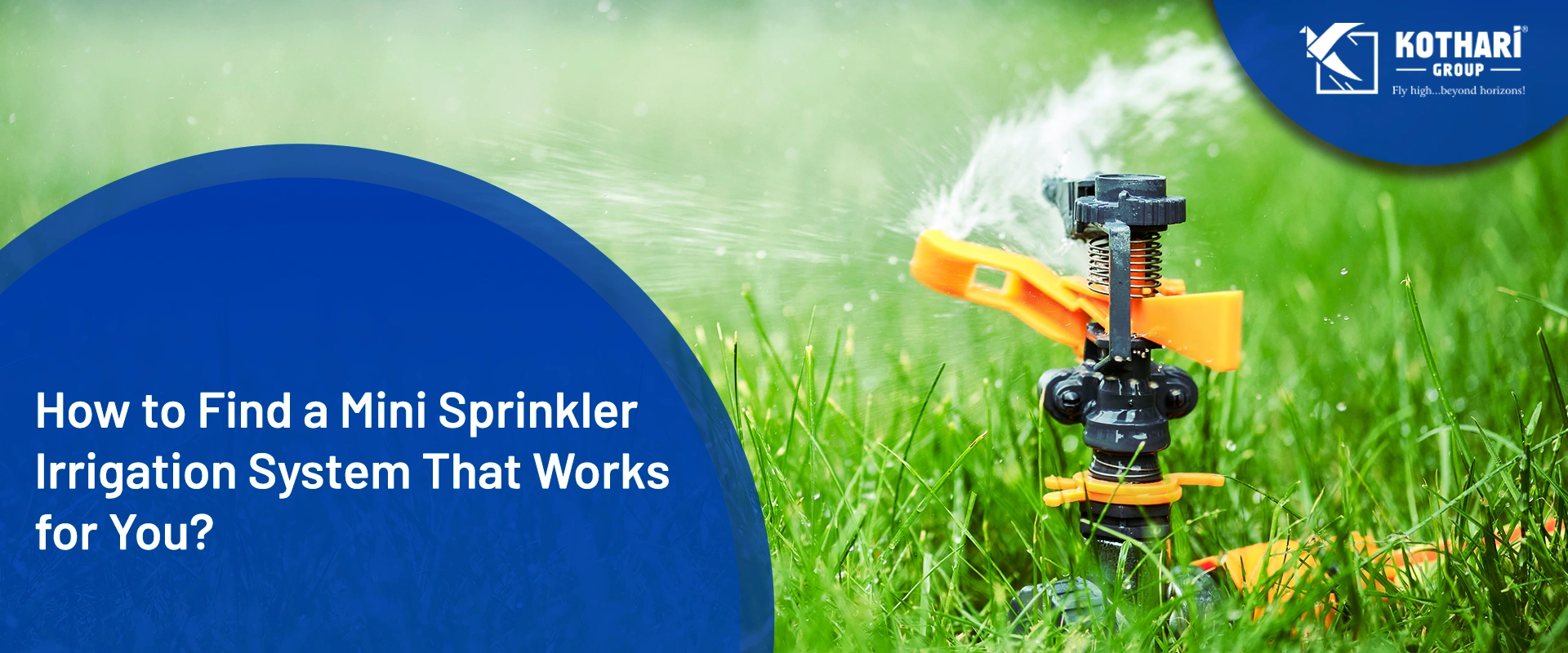
How to Find a Mini Sprinkler Irrigation System That Works for You?
Water management in farming is a complicated task. Different types of fields have different needs. For that, choosing the right irrigation setup can make a significant difference and provide long-term results.
A mini sprinkler system is a smaller, more practical setup for controlled watering in limited areas. It is becoming a common choice because it reduces manual effort and helps manage water usage more efficiently than traditional methods.
In this blog, we will look at what a mini sprinkler system is, how it works, where it is used, and what to check before selecting one. We will also explain the difference between a sprinkler system and a micro-sprinkler system, so you can make a better decision for your farm.
Understanding What You Actually Need
Before beginning the selection of an irrigation system, it is important to first understand your field. A mini sprinkler system is usually meant for small to medium areas where water needs to be spread gently and evenly.
A majority of farmers consider micro sprinklers, which are used for focused watering. Both systems are part of a larger sprinkler irrigation system specifically designed for fields of different sizes and crop requirements.
This is where the Kothari Group plays an important role, because good piping ensures smooth water flow and better system performance.
How a Mini Sprinkler System Works
A mini sprinkler system works in a very simple way. It is designed in such a way that water flows through pipes to small sprinkler heads. That’s why it is also known as an irrigation sprinkler. Finally, these heads break water into fine droplets, so it spreads throughout the area.
These sprinkler systems don’t flood the soil. It gives controlled watering in small amounts. Over time, this makes the overall irrigation system easier to manage and more stable in daily use.
Using reliable components from Kothari Pipes also helps maintain proper pressure and flow.
Where it Works Best
Generally, micro sprinklers are used for irrigation on vegetable farms, nurseries, gardens, small agricultural plots, etc. They are useful in those areas where the water supply requires careful usage.
Farmers prefer this type of sprinkler irrigation system because it reduces manual watering effort. They just need to install it and it delivers water covering the entire field without any hassle.
Factors to Check to Find the Best Mini Sprinkler
Check your Field Size– Mini sprinkler systems are the best fit for small and medium areas. They are also practical and cost-friendly.
Check Build Quality and Components– A weak setup will require frequent repairs and won’t last long. Thus, using proper UPVC pipes and fittings from Kothari Pipes helps in avoiding leakage and uneven water flow.
Understand Your Water Pressure– If the water pressure is low, then the irrigation sprinkler will not be able to spread water properly, and high pressure can damage the system.
Installation and Ease of Use– Mini sprinkler systems should be easy to install and manage. Most small systems are simple, but an appropriate layout for each field is important.
Conclusion
Finding the right mini sprinkler system is mostly about matching it with your water supply, crop types, and field requirements. There is no fixed setup that will work for everyone. What really matters is that you must choose a system that runs smoothly without frequent issues for your day-to-day farming.
Good pipes and fittings also make a big difference in how stable the irrigation system performs over time. With support from Kothari irrigation solutions, farmers can easily set up a system that is practical and suitable for long-term use in real field conditions.
Frequently Asked Questions
- What is the difference between a micro sprinkler and a mini sprinkler?
A micro sprinkler covers a small area, which requires focused watering. On the other hand, a mini system can cover a slightly wider field area.
- Can I use a sprinkler irrigation system for all types of crops?
Yes, you can use a sprinkler irrigation system for different types of crops, but you must match the setup according to the crop type and field size.
- Does pipe quality matter in a mini sprinkler system?
Yes, using good PVC pipes and fittings from Kothari Pipes helps keep the irrigation system stable and long-lasting.
- What should I check before buying an irrigation sprinkler?
Check water pressure, pipe quality, and field size before choosing an irrigation sprinkler setup.
